

Dwujęzyczność jest trudnym obszarem do badania, gęstym lasem zmiennych zakłócających, z których pobieranie próbek, poziomy wykształcenia, używane zadania, różnice w samych językach i różne wyniki z różnych kombinacji językowych to tylko kilka z nich. Istnieją jednak dowody na to, że ekspertyza w więcej niż jednym języku zapewnia korzyści poznawcze oprócz zwiększonych możliwości. Odkrycia w dziedzinie neurologii wiążą naukę języka ze zmianami strukturalnymi w mózgu, które wspomagają funkcje wykonawcze, takie jak elastyczność poznawcza, kreatywne myślenie i zarządzanie uwagą.
Czym jest edukacja dwujęzyczna?
Ludzkie zachowania i percepcje są przekazywane za pośrednictwem naszego języka; kody odblokowywane podczas nauki nowych języków pomagają stworzyć nowy poziom percepcji. Wiodący szwajcarski naukowiec i ekspert w dziedzinie dwujęzyczności, François Grosjean, wykazał, że dwujęzyczne dziecko lub dorosły nie jest po prostu sumą dwóch (lub więcej) osób jednojęzycznych; jest raczej właścicielem unikalnej i specyficznej konfiguracji językowej. Osoba dwujęzyczna zarządza i manipuluje uwagą skupioną na jednym lub drugim języku, aktywnie, ale często podświadomie. Ich języki nie tylko współistnieją; oddziałują na siebie, tworząc kompletny, własny system.
Korzyści z edukacji dwujęzycznej
We współczesnym, zglobalizowanym świecie edukacja dwujęzyczna odgrywa kluczową rolę i oferuje wyraźne korzyści, zwłaszcza młodszym pokoleniom.
1. Obywatele świata
Osoby dwujęzyczne są nieocenione w dzisiejszym świecie. Odkryją, że otwierają się przed nimi perspektywy zatrudnienia i poszerzają horyzonty społeczne. Ich zaangażowanie w świat i społeczeństwo, w którym żyjemy, jest bogate; ich umysły są bystre.
2. Korzyści psychologiczne
Co więcej, ich umiejętności wykraczają poza proste tłumaczenie słów z jednego kodu na drugi; dobra znajomość innego języka przynosi subtelne korzyści psychologiczne. Należą do nich umiejętność spojrzenia na historię z obu stron, docenienia rozszerzonego znaczenia i korzystania z szerokiego zakresu rozumienia pojęć. Takie cechy są korzystne dla danej osoby i, co najważniejsze, pomagają w osiągnięciu nieuchwytnego celu, jakim jest międzynarodowa harmonia. Osoby dwujęzyczne pełnią rolę budowniczych mostów, pośredników, którzy potrafią wyjaśnić jedną kulturę członkom drugiej i działać jako pośrednicy między nimi.
3. Biegłość językowa
Międzynarodowe szkolnictwo pomogło zwiększyć biegłość językową. W miarę jak rodziny stają się coraz bardziej globalne, a coraz więcej młodych ludzi podróżuje na studia i do pracy, mogą oni spotkać przyszłego partnera z dala od swojego kraju urodzenia, co skutkuje większą liczbą rodzin wielokulturowych, które dzielą się kilkoma językami w swoich międzynarodowych gospodarstwach domowych. Podczas gdy mamy do czynienia z dominacją jednego języka w szerokich obszarach ludzkiej działalności, z angielskim jako językiem 1 lub językiem 2 dla wielu, jeśli nie większości, tych studentów, fascynujące jest to, że skutkuje to uznawaniem coraz większej liczby wersji języka angielskiego. Populacja globalnych obywateli dzielących się korzyściami płynącymi z różnych form dwujęzyczności rośnie.
4. Zrozumienie kultur
Poza funkcjonalnymi korzyściami płynącymi z nauki języków, dwujęzyczność wiąże się ze zrozumieniem kultur. Tworząc swój unikalny system językowy, osoba dwujęzyczna nadaje również sens swojemu związkowi z obiema kulturami, do których kod językowy dał dostęp. Jednocześnie zwracając uwagę na ten kod, jego słownictwo i składnię, osoba dwujęzyczna będzie zwracać uwagę na warianty kulturowe między językami. Nieustannie łączą i mieszają aspekty kultur, w których żyją, dokonując wyborów językowych i kulturowych zgodnie z potrzebami okoliczności.
Rezultatem jest "przestrzeń pomiędzy", jak siedlisko Third Culture Kids. Idea Third Culture Kids została opracowana w odniesieniu do dzieci dorastających poza krajem ojczystym swoich rodziców (którzy często sami byli emigrantami). Stają się one częścią trzeciej kultury, a nie tej, która wywodzi się z prostej mieszanki kraju pochodzenia i kraju przyjmującego.
Bilinguals as Bridge Builders
Francois Grosjean points out that bilinguals who are allowed to be who they are, and to accept their dual (or multiple) lived experiences, are invaluable members of society who bridge the gap between the cultures they belong to. This is an important role played by the sort of educational provision to be found at Institut Montana.
Continue reading
Bilinguals as Bridge Builders
Francois Grosjean points out that bilinguals who are allowed to be who they are, and to accept their dual (or multiple) lived experiences, are invaluable members of society who bridge the gap between the cultures they belong to. This is an important role played by the sort of educational provision to be found at Institut Montana.
Continue reading
Dwujęzyczna klasa
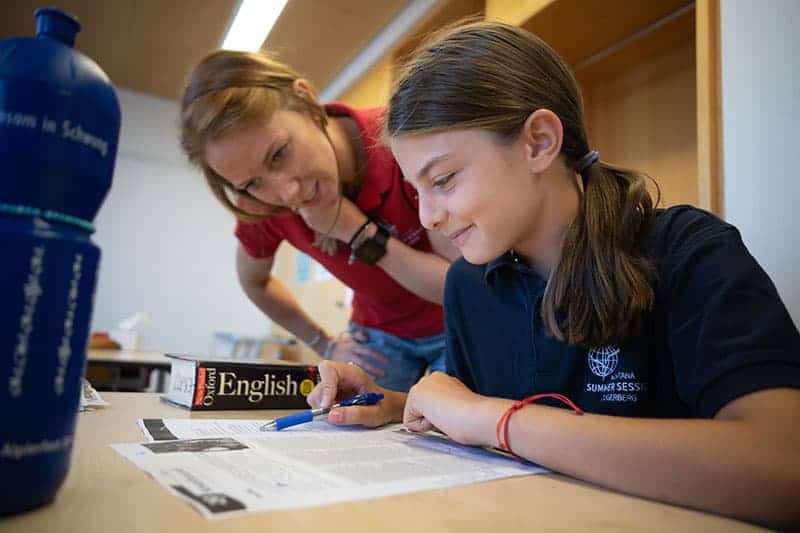
Dwujęzyczna klasa to inspirujące miejsce. Już sam widok prac szkolnych dzieci na wystawie, z podpisami i etykietami wykazującymi biegłość w dwóch językach, rozwija umysł. Ale nie dzieje się to samo z siebie, a jakość nauczania ma kluczowe znaczenie - każde dziecko musi czuć się szczęśliwe i pewne siebie, aby było otwarte na wyzwania i korzyści płynące z dwujęzycznej nauki. Badania nad dwujęzycznym mózgiem ukierunkowują metody nauczania. Obecnie wiadomo, że dzieci te używają obu języków, aby zrozumieć świat; są bardzo adaptacyjne, pogłębiając zrozumienie pierwszego języka podczas nauki drugiego; a proces ten ma istotny pozytywny wpływ na inne aspekty rozwoju poznawczego, takie jak zarządzanie uwagą.
A Tradition of International Education
The Bilingual Elementary section of Institut Montana has the school’s long history of international education on which to draw, as well as the dedication and expertise of its staff. Teaching in the bilingual classroom requires a thorough approach, with plenty of individual assessment and on-going help. Quality teaching comes from using evidence-based principles of instruction, such as teacher modelling and verbalizations, guided practice, and brisk lesson pacing to maintain student engagement.
Continue reading
Tailored Support for Every Child
The Montana Elementary school classrooms are tucked away in a pretty corner of the magnificent Institut Montana campus. As soon as a new child arrives, their language needs are quickly assessed and appropriate support organised. It might be that the child has some skills but needs in-class support to benefit fully from the lesson. In this case, teachers deploy the integrative EAL (for English) or DaZ (for German) programme where support is provided by an additional teacher within the normal classroom following the standard lessons. If the child would benefit from more intensive language tuition, they receive help specially tailored to their needs. For half of the English or German language lessons, they work with an extra teacher outside the classroom so that they quickly learn the foundational skills to enable rapid progress in the new language and find the subject matter within their reach. For the other half they continue to participate in normal lessons so that they can interact with their peers.
Continue reading
Balancing Languages and Identities
In this multi-lingual group of young learners, it is important not to hold up one language, and therefore cultural identity, as superior to another. Seeing one of the languages and its culture as the dominant one is counter-productive to the cultural harmony the bilingual classroom seeks to promote, even when the curriculum followed belongs to one of the languages. The Institut Montana Bilingual Elementary School follows the curriculum of its home country, Switzerland, but the balance between the two languages is scrupulously maintained. Teaching is distributed at 50% of the time for each language. Each academic year the groups change Class Advisors, swapping between German and English speaking, so there is a further balance in exposure to both languages.
Continue reading
A Tradition of International Education
The Bilingual Elementary section of Institut Montana has the school’s long history of international education on which to draw, as well as the dedication and expertise of its staff. Teaching in the bilingual classroom requires a thorough approach, with plenty of individual assessment and on-going help. Quality teaching comes from using evidence-based principles of instruction, such as teacher modelling and verbalizations, guided practice, and brisk lesson pacing to maintain student engagement.
Continue reading
Tailored Support for Every Child
The Montana Elementary school classrooms are tucked away in a pretty corner of the magnificent Institut Montana campus. As soon as a new child arrives, their language needs are quickly assessed and appropriate support organised. It might be that the child has some skills but needs in-class support to benefit fully from the lesson. In this case, teachers deploy the integrative EAL (for English) or DaZ (for German) programme where support is provided by an additional teacher within the normal classroom following the standard lessons. If the child would benefit from more intensive language tuition, they receive help specially tailored to their needs. For half of the English or German language lessons, they work with an extra teacher outside the classroom so that they quickly learn the foundational skills to enable rapid progress in the new language and find the subject matter within their reach. For the other half they continue to participate in normal lessons so that they can interact with their peers.
Continue reading
Balancing Languages and Identities
In this multi-lingual group of young learners, it is important not to hold up one language, and therefore cultural identity, as superior to another. Seeing one of the languages and its culture as the dominant one is counter-productive to the cultural harmony the bilingual classroom seeks to promote, even when the curriculum followed belongs to one of the languages. The Institut Montana Bilingual Elementary School follows the curriculum of its home country, Switzerland, but the balance between the two languages is scrupulously maintained. Teaching is distributed at 50% of the time for each language. Each academic year the groups change Class Advisors, swapping between German and English speaking, so there is a further balance in exposure to both languages.
Continue reading
Jasna przyszłość
Nie ma wątpliwości, że nauka nowego języka poszerza horyzonty i dodaje przydatne umiejętności. Co więcej, przynosi ogromne korzyści poznawcze, które pomimo tego, że podlegają zbyt wielu zmiennym, aby je wyodrębnić, są realne i znaczące.
Pathways to Global Opportunities
At Institut Montana, as they reach the end of their years at the Elementary School, these children greet a world of opportunity. They have the advanced skills in German that open the door to the academically demanding Swiss Matura, which they can choose to study in German or German and English. They can embark on the route towards the International Baccalaureate Diploma, a passport to universities all over the world. Or they can continue their bilingual studies at the Bilingual Secondary School while assessing where their ambitions might take them.
Continue reading
Pathways to Global Opportunities
At Institut Montana, as they reach the end of their years at the Elementary School, these children greet a world of opportunity. They have the advanced skills in German that open the door to the academically demanding Swiss Matura, which they can choose to study in German or German and English. They can embark on the route towards the International Baccalaureate Diploma, a passport to universities all over the world. Or they can continue their bilingual studies at the Bilingual Secondary School while assessing where their ambitions might take them.
Continue reading
Streszczenie
Dzieci spotykające się, aby uczyć się, bawić i współpracować w przestrzeni, w której dwa języki są wspólną walutą, tworzą przestrzeń hybrydową z kulturą, która nie należy ani do jednej, ani do drugiej. Dwujęzyczna klasa to przestrzeń inkluzywności, w której nowe światło rzuca się na idee dotyczące tożsamości kulturowej. Jej uczniowie będą globalnymi obywatelami jutra, dorosłymi o szerokich horyzontach i wnikliwych umysłach, którzy potrafią dzielić się wiedzą i dyskutować na jej temat w wielokulturowym środowisku i doskonale czują się na międzynarodowych spotkaniach Zoom. Przyszłość tych dzieci rysuje się w jasnych barwach.
Co mówią szkoły
Szkoły, które mają praktyczne doświadczenie w tym temacie, dzielą się swoją perspektywą.
Bilinguals as Bridge Builders
Francois Grosjean points out that bilinguals who are allowed to be who they are, and to accept their dual (or multiple) lived experiences, are invaluable members of society who bridge the gap between the cultures they belong to. This is an important role played by the sort of educational provision to be found at Institut Montana.
Continue reading
A Tradition of International Education
The Bilingual Elementary section of Institut Montana has the school’s long history of international education on which to draw, as well as the dedication and expertise of its staff. Teaching in the bilingual classroom requires a thorough approach, with plenty of individual assessment and on-going help. Quality teaching comes from using evidence-based principles of instruction, such as teacher modelling and verbalizations, guided practice, and brisk lesson pacing to maintain student engagement.
Continue reading
Tailored Support for Every Child
The Montana Elementary school classrooms are tucked away in a pretty corner of the magnificent Institut Montana campus. As soon as a new child arrives, their language needs are quickly assessed and appropriate support organised. It might be that the child has some skills but needs in-class support to benefit fully from the lesson. In this case, teachers deploy the integrative EAL (for English) or DaZ (for German) programme where support is provided by an additional teacher within the normal classroom following the standard lessons. If the child would benefit from more intensive language tuition, they receive help specially tailored to their needs. For half of the English or German language lessons, they work with an extra teacher outside the classroom so that they quickly learn the foundational skills to enable rapid progress in the new language and find the subject matter within their reach. For the other half they continue to participate in normal lessons so that they can interact with their peers.
Continue reading
Balancing Languages and Identities
In this multi-lingual group of young learners, it is important not to hold up one language, and therefore cultural identity, as superior to another. Seeing one of the languages and its culture as the dominant one is counter-productive to the cultural harmony the bilingual classroom seeks to promote, even when the curriculum followed belongs to one of the languages. The Institut Montana Bilingual Elementary School follows the curriculum of its home country, Switzerland, but the balance between the two languages is scrupulously maintained. Teaching is distributed at 50% of the time for each language. Each academic year the groups change Class Advisors, swapping between German and English speaking, so there is a further balance in exposure to both languages.
Continue reading

Alexander Peipers jest współzałożycielem i dyrektorem generalnym firmy World Schools I Obozy światowegdzie kieruje misją zapewnienia rodzinom rzetelnych wskazówek w wyborze szkół i programów, które wspierają doskonałość akademicką, różnorodność kulturową i holistyczny rozwój.
Znajdź swoją nową szkołę
Lokalizacja
Gdziekolwiek
Rodzaj szkoły
Jakakolwiek szkoła