

Tweetaligheid is een moeilijk te onderzoeken gebied, een dicht woud van verstorende variabelen, waarvan steekproeftrekking, opleidingsniveau, gebruikte taken, variaties in de talen zelf en verschillende resultaten van verschillende taalcombinaties er maar een paar zijn. Er zijn echter aanwijzingen dat expertise in meer dan één taal cognitieve voordelen oplevert bovenop de toegenomen mogelijkheden. Bevindingen in de neurologie hebben taalverwerving in verband gebracht met structurele veranderingen in de hersenen die helpen bij uitvoerende functies zoals cognitieve flexibiliteit, creatief denken en aandachtsmanagement.
Wat is tweetalig onderwijs?
Menselijk gedrag en percepties worden gemedieerd door onze taal; de codes die worden ontsloten wanneer nieuwe talen worden geleerd, dragen bij aan een nieuw niveau van perceptie. De vooraanstaande Zwitserse academicus en expert op het gebied van tweetaligheid, François Grosjean, heeft aangetoond dat een tweetalig kind of een tweetalige volwassene niet simpelweg de som is van twee (of meer) eentaligen; hij of zij is veeleer de eigenaar van een unieke en specifieke taalconfiguratie. De tweetalige beheerst en manipuleert de aandacht voor de ene of de andere taal, actief maar vaak onbewust. Hun talen bestaan niet alleen naast elkaar; ze werken samen om een compleet eigen systeem te vormen.
Voordelen van tweetalig onderwijs
In de huidige geglobaliseerde wereld speelt tweetalig onderwijs een cruciale rol en biedt het duidelijke voordelen, vooral voor de jongere generaties.
1. Wereldburgers
Tweetalige mensen zijn van onschatbare waarde in de wereld van vandaag. Ze zullen merken dat hun carrièreperspectieven zich openen en hun sociale horizon verruimt. Hun betrokkenheid bij de wereld en de menselijke samenleving waarin we leven is rijk; hun geest is flexibel.
2. Psychologische voordelen
Bovendien gaan hun eigenschappen verder dan alleen het vertalen van woorden van de ene code naar de andere; een goede beheersing van een andere taal brengt subtiele psychologische voordelen met zich mee. Denk bijvoorbeeld aan het vermogen om beide kanten van het verhaal te zien, de bredere betekenis te begrijpen en te genieten van een breed conceptueel begrip. Zulke eigenschappen zijn gunstig voor het betrokken individu en, cruciaal, dragen bij aan het ongrijpbare doel van internationale harmonie. Tweetaligen fungeren als bruggenbouwers, de bemiddelaars die de ene cultuur kunnen uitleggen aan leden van de andere en als tussenpersoon tussen beide kunnen fungeren.
3. Taalvaardigheid
Internationaal onderwijs heeft geholpen om de taalvaardigheid te vergroten. Naarmate gezinnen globaler worden en meer jonge mensen reizen voor studie en werk, ontmoeten ze misschien een toekomstige partner ver van hun geboorteland, waardoor er meer multiculturele gezinnen zijn die meerdere talen delen in hun internationale huishoudens. Terwijl we geconfronteerd worden met de dominantie van één taal in brede gebieden van menselijke activiteit, met Engels als Taal 1 of Taal 2 voor veel, zo niet de meeste, van die studenten, is het fascinerend om te zien hoe dat ertoe leidt dat steeds meer versies van het Engels erkend worden. De populatie van wereldburgers die de voordelen van verschillende vormen van tweetaligheid delen, neemt toe.
4. Culturen begrijpen
Naast de functionele voordelen van het leren van een taal, gaat tweetaligheid ook over het begrijpen van culturen. Met de creatie van een uniek taalsysteem geeft de tweetalige ook betekenis aan zijn of haar relatie tot beide culturen waartoe de taalcode toegang geeft. Terwijl ze hun aandacht richten op deze code, de woordenschat en de syntaxis, hebben tweetaligen ook aandacht voor de culturele varianten tussen de talen. Ze combineren en vermengen voortdurend aspecten van de culturen waarin ze leven en maken taalkundige en culturele keuzes afhankelijk van de omstandigheden.
Het resultaat is een "tussenruimte", zoals de habitat van Third Culture Kids. Het idee van de Third Culture Kids werd ontwikkeld om te verwijzen naar kinderen die opgroeien buiten de geboortelanden van hun ouders (die vaak zelf expats waren). Ze worden deel van een derde cultuur in plaats van een cultuur die voortkomt uit een simpele mix van het thuisland en het gastland.
Bilinguals as Bridge Builders
Francois Grosjean points out that bilinguals who are allowed to be who they are, and to accept their dual (or multiple) lived experiences, are invaluable members of society who bridge the gap between the cultures they belong to. This is an important role played by the sort of educational provision to be found at Institut Montana.
Continue reading
Bilinguals as Bridge Builders
Francois Grosjean points out that bilinguals who are allowed to be who they are, and to accept their dual (or multiple) lived experiences, are invaluable members of society who bridge the gap between the cultures they belong to. This is an important role played by the sort of educational provision to be found at Institut Montana.
Continue reading
De tweetalige klas
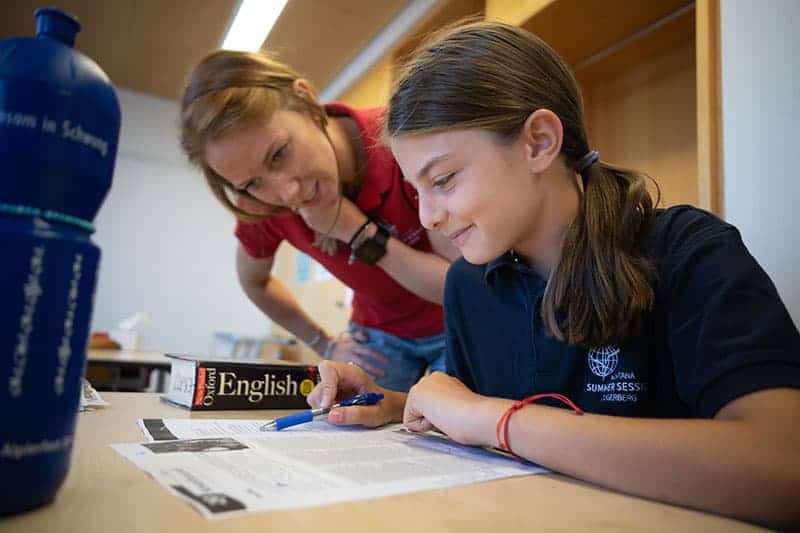
Het tweetalige klaslokaal is een inspirerende plek. Alleen al het zien van het schoolwerk van de kinderen, met bijschriften en labels die de vaardigheid in twee talen laten zien, is geestverruimend. Maar het gaat niet vanzelf en de kwaliteit van het onderwijs is van cruciaal belang - elk kind moet zich gelukkig en zelfverzekerd voelen om open te staan voor de uitdagingen en voordelen van tweetalig leren. Onderzoek naar het tweetalige brein geeft richting aan de lesmethoden. Men begrijpt nu dat deze kinderen beide talen gebruiken om de wereld te begrijpen; ze zijn zeer adaptief, verdiepen hun begrip van de eerste taal terwijl ze de tweede taal verwerven; en het proces heeft belangrijke positieve effecten op andere aspecten van de cognitieve ontwikkeling, zoals aandachtsmanagement.
A Tradition of International Education
The Bilingual Elementary section of Institut Montana has the school’s long history of international education on which to draw, as well as the dedication and expertise of its staff. Teaching in the bilingual classroom requires a thorough approach, with plenty of individual assessment and on-going help. Quality teaching comes from using evidence-based principles of instruction, such as teacher modelling and verbalizations, guided practice, and brisk lesson pacing to maintain student engagement.
Continue reading
Tailored Support for Every Child
The Montana Elementary school classrooms are tucked away in a pretty corner of the magnificent Institut Montana campus. As soon as a new child arrives, their language needs are quickly assessed and appropriate support organised. It might be that the child has some skills but needs in-class support to benefit fully from the lesson. In this case, teachers deploy the integrative EAL (for English) or DaZ (for German) programme where support is provided by an additional teacher within the normal classroom following the standard lessons. If the child would benefit from more intensive language tuition, they receive help specially tailored to their needs. For half of the English or German language lessons, they work with an extra teacher outside the classroom so that they quickly learn the foundational skills to enable rapid progress in the new language and find the subject matter within their reach. For the other half they continue to participate in normal lessons so that they can interact with their peers.
Continue reading
Balancing Languages and Identities
In this multi-lingual group of young learners, it is important not to hold up one language, and therefore cultural identity, as superior to another. Seeing one of the languages and its culture as the dominant one is counter-productive to the cultural harmony the bilingual classroom seeks to promote, even when the curriculum followed belongs to one of the languages. The Institut Montana Bilingual Elementary School follows the curriculum of its home country, Switzerland, but the balance between the two languages is scrupulously maintained. Teaching is distributed at 50% of the time for each language. Each academic year the groups change Class Advisors, swapping between German and English speaking, so there is a further balance in exposure to both languages.
Continue reading
A Tradition of International Education
The Bilingual Elementary section of Institut Montana has the school’s long history of international education on which to draw, as well as the dedication and expertise of its staff. Teaching in the bilingual classroom requires a thorough approach, with plenty of individual assessment and on-going help. Quality teaching comes from using evidence-based principles of instruction, such as teacher modelling and verbalizations, guided practice, and brisk lesson pacing to maintain student engagement.
Continue reading
Tailored Support for Every Child
The Montana Elementary school classrooms are tucked away in a pretty corner of the magnificent Institut Montana campus. As soon as a new child arrives, their language needs are quickly assessed and appropriate support organised. It might be that the child has some skills but needs in-class support to benefit fully from the lesson. In this case, teachers deploy the integrative EAL (for English) or DaZ (for German) programme where support is provided by an additional teacher within the normal classroom following the standard lessons. If the child would benefit from more intensive language tuition, they receive help specially tailored to their needs. For half of the English or German language lessons, they work with an extra teacher outside the classroom so that they quickly learn the foundational skills to enable rapid progress in the new language and find the subject matter within their reach. For the other half they continue to participate in normal lessons so that they can interact with their peers.
Continue reading
Balancing Languages and Identities
In this multi-lingual group of young learners, it is important not to hold up one language, and therefore cultural identity, as superior to another. Seeing one of the languages and its culture as the dominant one is counter-productive to the cultural harmony the bilingual classroom seeks to promote, even when the curriculum followed belongs to one of the languages. The Institut Montana Bilingual Elementary School follows the curriculum of its home country, Switzerland, but the balance between the two languages is scrupulously maintained. Teaching is distributed at 50% of the time for each language. Each academic year the groups change Class Advisors, swapping between German and English speaking, so there is a further balance in exposure to both languages.
Continue reading
Een stralende toekomst
Het lijdt geen twijfel dat het leren van een nieuwe taal je horizon verbreedt en een nuttige vaardigheid toevoegt. Bovendien brengt het grote cognitieve voordelen met zich mee die, ondanks het feit dat er te veel variabelen zijn om ze uit elkaar te houden, echt en zinvol zijn.
Pathways to Global Opportunities
At Institut Montana, as they reach the end of their years at the Elementary School, these children greet a world of opportunity. They have the advanced skills in German that open the door to the academically demanding Swiss Matura, which they can choose to study in German or German and English. They can embark on the route towards the International Baccalaureate Diploma, a passport to universities all over the world. Or they can continue their bilingual studies at the Bilingual Secondary School while assessing where their ambitions might take them.
Continue reading
Pathways to Global Opportunities
At Institut Montana, as they reach the end of their years at the Elementary School, these children greet a world of opportunity. They have the advanced skills in German that open the door to the academically demanding Swiss Matura, which they can choose to study in German or German and English. They can embark on the route towards the International Baccalaureate Diploma, a passport to universities all over the world. Or they can continue their bilingual studies at the Bilingual Secondary School while assessing where their ambitions might take them.
Continue reading
Samenvatting
Kinderen die samenkomen om te leren, te spelen en samen te werken in een ruimte waar twee talen de gemeenschappelijke valuta zijn, creëren een hybride ruimte met een cultuur die noch bij de een noch bij de ander hoort. De tweetalige klas is een ruimte voor inclusiviteit, waar een nieuw licht wordt geworpen op ideeën over culturele identiteit. De leerlingen zullen de wereldburgers van morgen zijn, ruimdenkende en inzichtelijke volwassenen die bedreven zijn in het delen en bespreken van kennis in een multiculturele omgeving en die zich helemaal thuis voelen in een internationale Zoom-bijeenkomst. Voor deze slimme kinderen is de toekomst rooskleurig.
Wat scholen zeggen
Scholen die praktijkervaring hebben met dit onderwerp delen hun perspectief.
Bilinguals as Bridge Builders
Francois Grosjean points out that bilinguals who are allowed to be who they are, and to accept their dual (or multiple) lived experiences, are invaluable members of society who bridge the gap between the cultures they belong to. This is an important role played by the sort of educational provision to be found at Institut Montana.
Continue reading
A Tradition of International Education
The Bilingual Elementary section of Institut Montana has the school’s long history of international education on which to draw, as well as the dedication and expertise of its staff. Teaching in the bilingual classroom requires a thorough approach, with plenty of individual assessment and on-going help. Quality teaching comes from using evidence-based principles of instruction, such as teacher modelling and verbalizations, guided practice, and brisk lesson pacing to maintain student engagement.
Continue reading
Tailored Support for Every Child
The Montana Elementary school classrooms are tucked away in a pretty corner of the magnificent Institut Montana campus. As soon as a new child arrives, their language needs are quickly assessed and appropriate support organised. It might be that the child has some skills but needs in-class support to benefit fully from the lesson. In this case, teachers deploy the integrative EAL (for English) or DaZ (for German) programme where support is provided by an additional teacher within the normal classroom following the standard lessons. If the child would benefit from more intensive language tuition, they receive help specially tailored to their needs. For half of the English or German language lessons, they work with an extra teacher outside the classroom so that they quickly learn the foundational skills to enable rapid progress in the new language and find the subject matter within their reach. For the other half they continue to participate in normal lessons so that they can interact with their peers.
Continue reading
Balancing Languages and Identities
In this multi-lingual group of young learners, it is important not to hold up one language, and therefore cultural identity, as superior to another. Seeing one of the languages and its culture as the dominant one is counter-productive to the cultural harmony the bilingual classroom seeks to promote, even when the curriculum followed belongs to one of the languages. The Institut Montana Bilingual Elementary School follows the curriculum of its home country, Switzerland, but the balance between the two languages is scrupulously maintained. Teaching is distributed at 50% of the time for each language. Each academic year the groups change Class Advisors, swapping between German and English speaking, so there is a further balance in exposure to both languages.
Continue reading

Alexander Peipers is medeoprichter en CEO van World Schools En Wereldkampenwaar hij een missie leidt om gezinnen betrouwbare begeleiding te bieden bij het kiezen van scholen en programma's die academische uitmuntendheid, culturele diversiteit en holistische ontwikkeling bevorderen.
Vind je nieuwe school
Locatie
Overal
Soort school
Elke school