

El bilingüismo es un campo difícil de investigar, un denso bosque de variables de confusión, entre las que destacan el muestreo, los niveles educativos, las tareas utilizadas, las variaciones en las propias lenguas y los diferentes resultados de las distintas combinaciones lingüísticas. Sin embargo, hay pruebas de que dominar más de una lengua aporta beneficios cognitivos, además de mayores oportunidades. Los descubrimientos en neurología han relacionado la adquisición de idiomas con cambios estructurales en el cerebro que contribuyen a funciones ejecutivas como la flexibilidad cognitiva, el pensamiento creativo y la gestión de la atención.
¿Qué es la educación bilingüe?
El comportamiento y las percepciones humanas se median a través de nuestro idioma; los códigos que se desvelan al aprender nuevos idiomas ayudan a crear un nuevo nivel de percepción. El destacado académico suizo y experto en bilingüismo, François Grosjean, ha demostrado que el niño o adulto bilingüe no es simplemente la suma de dos (o más) monolingües; más bien, posee una configuración lingüística única y específica. El bilingüe gestiona y manipula la atención hacia uno u otro idioma, de forma activa, pero a menudo inconsciente. Sus idiomas no solo coexisten, sino que interactúan para crear un sistema completo propio.
Beneficios de la educación bilingüe
En el mundo globalizado moderno, la educación bilingüe desempeña un papel crucial y ofrece claras ventajas especialmente para las generaciones más jóvenes.
1. Ciudadanos globales
Las personas bilingües son invaluables en el mundo actual. Descubrirán que se abren nuevas oportunidades laborales y se amplían sus horizontes sociales. Su interacción con el mundo y la sociedad humana en la que vivimos es rica; sus mentes son ágiles.
2. Beneficios psicológicos
Además, sus atributos van más allá de la simple traducción de palabras de un código a otro; dominar otro idioma aporta sutiles beneficios psicológicos. Estos incluyen la capacidad de ver las dos caras de la moneda, apreciar el significado extenso y disfrutar de una amplia comprensión conceptual. Estos atributos son beneficiosos para la persona involucrada y, fundamentalmente, contribuyen a ese objetivo inalcanzable de la armonía internacional. Las personas bilingües actúan como puentes, como intermediarios que pueden explicar una cultura a los miembros de la otra y actuar como intermediarios entre ambas.
3. Competencia lingüística
La escolarización internacional ha contribuido a aumentar el dominio de idiomas. A medida que las familias se globalizan y más jóvenes viajan por estudios y trabajo, pueden conocer a su futura pareja lejos de su país de nacimiento, lo que da lugar a más familias multiculturales que comparten varios idiomas en sus hogares internacionales. Mientras nos enfrentamos al dominio de una lengua en amplios ámbitos de la actividad humana, con el inglés como Lengua 1 o Lengua 2 para muchos, si no la mayoría, de esos estudiantes, es fascinante observar cómo eso está dando lugar a que se reconozcan cada vez más versiones del inglés. La población de ciudadanos del mundo que comparten los beneficios de diversas formas de bilingüismo va en aumento.
4. Comprender las culturas
Además de los beneficios funcionales del aprendizaje de idiomas, el bilingüismo tiene que ver con la comprensión de las culturas. Con la creación de su sistema lingüístico único, el bilingüe también está dando sentido a su relación con las dos culturas a las que el código lingüístico le ha dado acceso. Al mismo tiempo que gestiona su atención a este código, su vocabulario y su sintaxis, el bilingüe prestará atención a las variantes culturales entre las lenguas. Está constantemente combinando y mezclando aspectos de las culturas que vive, haciendo elecciones lingüísticas y culturales según las necesidades de la circunstancia.
El resultado es un "espacio intermedio", como el hábitat de los Third Culture Kids. La idea de los Third Culture Kids se desarrolló para referirse a los niños que crecen fuera de los países de origen de sus padres (que a menudo eran ellos mismos expatriados). Pasan a formar parte de una tercera cultura en lugar de una que deriva de una simple mezcla de los países de origen y de acogida.
Bilinguals as Bridge Builders
Francois Grosjean points out that bilinguals who are allowed to be who they are, and to accept their dual (or multiple) lived experiences, are invaluable members of society who bridge the gap between the cultures they belong to. This is an important role played by the sort of educational provision to be found at Institut Montana.
Continue reading
Bilinguals as Bridge Builders
Francois Grosjean points out that bilinguals who are allowed to be who they are, and to accept their dual (or multiple) lived experiences, are invaluable members of society who bridge the gap between the cultures they belong to. This is an important role played by the sort of educational provision to be found at Institut Montana.
Continue reading
El aula bilingüe
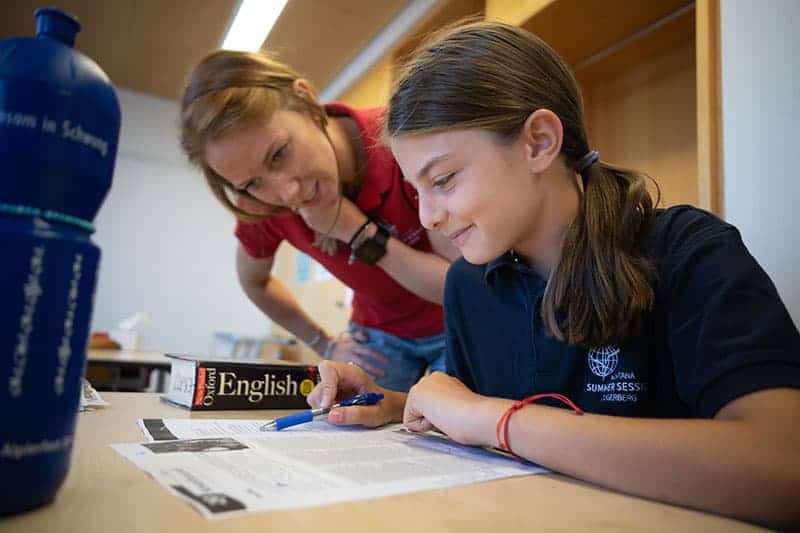
El aula bilingüe es un lugar inspirador. El mero hecho de ver los trabajos escolares de los niños expuestos, con leyendas y etiquetas que demuestran el dominio de dos idiomas, es alucinante. Pero esto no ocurre por sí solo, y la calidad de la enseñanza es fundamental: cada niño debe sentirse feliz y seguro de sí mismo para estar abierto a los retos y a los beneficios del aprendizaje bilingüe. La investigación sobre el cerebro bilingüe está orientando los métodos de enseñanza. Ahora se sabe que estos niños utilizan las dos lenguas para entender el mundo; que son muy adaptables, que profundizan en su comprensión de la primera lengua mientras adquieren la segunda; y que el proceso tiene importantes efectos positivos en otros aspectos del desarrollo cognitivo, como la gestión de la atención.
A Tradition of International Education
The Bilingual Elementary section of Institut Montana has the school’s long history of international education on which to draw, as well as the dedication and expertise of its staff. Teaching in the bilingual classroom requires a thorough approach, with plenty of individual assessment and on-going help. Quality teaching comes from using evidence-based principles of instruction, such as teacher modelling and verbalizations, guided practice, and brisk lesson pacing to maintain student engagement.
Continue reading
Tailored Support for Every Child
The Montana Elementary school classrooms are tucked away in a pretty corner of the magnificent Institut Montana campus. As soon as a new child arrives, their language needs are quickly assessed and appropriate support organised. It might be that the child has some skills but needs in-class support to benefit fully from the lesson. In this case, teachers deploy the integrative EAL (for English) or DaZ (for German) programme where support is provided by an additional teacher within the normal classroom following the standard lessons. If the child would benefit from more intensive language tuition, they receive help specially tailored to their needs. For half of the English or German language lessons, they work with an extra teacher outside the classroom so that they quickly learn the foundational skills to enable rapid progress in the new language and find the subject matter within their reach. For the other half they continue to participate in normal lessons so that they can interact with their peers.
Continue reading
Balancing Languages and Identities
In this multi-lingual group of young learners, it is important not to hold up one language, and therefore cultural identity, as superior to another. Seeing one of the languages and its culture as the dominant one is counter-productive to the cultural harmony the bilingual classroom seeks to promote, even when the curriculum followed belongs to one of the languages. The Institut Montana Bilingual Elementary School follows the curriculum of its home country, Switzerland, but the balance between the two languages is scrupulously maintained. Teaching is distributed at 50% of the time for each language. Each academic year the groups change Class Advisors, swapping between German and English speaking, so there is a further balance in exposure to both languages.
Continue reading
A Tradition of International Education
The Bilingual Elementary section of Institut Montana has the school’s long history of international education on which to draw, as well as the dedication and expertise of its staff. Teaching in the bilingual classroom requires a thorough approach, with plenty of individual assessment and on-going help. Quality teaching comes from using evidence-based principles of instruction, such as teacher modelling and verbalizations, guided practice, and brisk lesson pacing to maintain student engagement.
Continue reading
Tailored Support for Every Child
The Montana Elementary school classrooms are tucked away in a pretty corner of the magnificent Institut Montana campus. As soon as a new child arrives, their language needs are quickly assessed and appropriate support organised. It might be that the child has some skills but needs in-class support to benefit fully from the lesson. In this case, teachers deploy the integrative EAL (for English) or DaZ (for German) programme where support is provided by an additional teacher within the normal classroom following the standard lessons. If the child would benefit from more intensive language tuition, they receive help specially tailored to their needs. For half of the English or German language lessons, they work with an extra teacher outside the classroom so that they quickly learn the foundational skills to enable rapid progress in the new language and find the subject matter within their reach. For the other half they continue to participate in normal lessons so that they can interact with their peers.
Continue reading
Balancing Languages and Identities
In this multi-lingual group of young learners, it is important not to hold up one language, and therefore cultural identity, as superior to another. Seeing one of the languages and its culture as the dominant one is counter-productive to the cultural harmony the bilingual classroom seeks to promote, even when the curriculum followed belongs to one of the languages. The Institut Montana Bilingual Elementary School follows the curriculum of its home country, Switzerland, but the balance between the two languages is scrupulously maintained. Teaching is distributed at 50% of the time for each language. Each academic year the groups change Class Advisors, swapping between German and English speaking, so there is a further balance in exposure to both languages.
Continue reading
Un futuro brillante
No cabe duda de que aprender un nuevo idioma amplía horizontes y añade una habilidad útil. Además, aporta grandes beneficios cognitivos que, a pesar de estar sujetos a demasiadas variables como para separarlas, son reales y significativos.
Pathways to Global Opportunities
At Institut Montana, as they reach the end of their years at the Elementary School, these children greet a world of opportunity. They have the advanced skills in German that open the door to the academically demanding Swiss Matura, which they can choose to study in German or German and English. They can embark on the route towards the International Baccalaureate Diploma, a passport to universities all over the world. Or they can continue their bilingual studies at the Bilingual Secondary School while assessing where their ambitions might take them.
Continue reading
Pathways to Global Opportunities
At Institut Montana, as they reach the end of their years at the Elementary School, these children greet a world of opportunity. They have the advanced skills in German that open the door to the academically demanding Swiss Matura, which they can choose to study in German or German and English. They can embark on the route towards the International Baccalaureate Diploma, a passport to universities all over the world. Or they can continue their bilingual studies at the Bilingual Secondary School while assessing where their ambitions might take them.
Continue reading
Resumen
Los niños que se reúnen para aprender, jugar y colaborar en un espacio donde las dos lenguas son moneda común crean un espacio híbrido con una cultura que no pertenece ni a una ni a otra. El aula bilingüe es un espacio para la inclusión, donde se arroja una nueva luz sobre las ideas acerca de la identidad cultural. Sus alumnos serán los ciudadanos globales del mañana, adultos de mente abierta y perspicaz, expertos en compartir y debatir conocimientos en un entorno multicultural y totalmente cómodos en una reunión internacional de Zoom. Para estos niños brillantes, el futuro es prometedor.
Lo que dicen las escuelas
Las escuelas con experiencia práctica en este tema comparten su perspectiva.
Bilinguals as Bridge Builders
Francois Grosjean points out that bilinguals who are allowed to be who they are, and to accept their dual (or multiple) lived experiences, are invaluable members of society who bridge the gap between the cultures they belong to. This is an important role played by the sort of educational provision to be found at Institut Montana.
Continue reading
A Tradition of International Education
The Bilingual Elementary section of Institut Montana has the school’s long history of international education on which to draw, as well as the dedication and expertise of its staff. Teaching in the bilingual classroom requires a thorough approach, with plenty of individual assessment and on-going help. Quality teaching comes from using evidence-based principles of instruction, such as teacher modelling and verbalizations, guided practice, and brisk lesson pacing to maintain student engagement.
Continue reading
Tailored Support for Every Child
The Montana Elementary school classrooms are tucked away in a pretty corner of the magnificent Institut Montana campus. As soon as a new child arrives, their language needs are quickly assessed and appropriate support organised. It might be that the child has some skills but needs in-class support to benefit fully from the lesson. In this case, teachers deploy the integrative EAL (for English) or DaZ (for German) programme where support is provided by an additional teacher within the normal classroom following the standard lessons. If the child would benefit from more intensive language tuition, they receive help specially tailored to their needs. For half of the English or German language lessons, they work with an extra teacher outside the classroom so that they quickly learn the foundational skills to enable rapid progress in the new language and find the subject matter within their reach. For the other half they continue to participate in normal lessons so that they can interact with their peers.
Continue reading
Balancing Languages and Identities
In this multi-lingual group of young learners, it is important not to hold up one language, and therefore cultural identity, as superior to another. Seeing one of the languages and its culture as the dominant one is counter-productive to the cultural harmony the bilingual classroom seeks to promote, even when the curriculum followed belongs to one of the languages. The Institut Montana Bilingual Elementary School follows the curriculum of its home country, Switzerland, but the balance between the two languages is scrupulously maintained. Teaching is distributed at 50% of the time for each language. Each academic year the groups change Class Advisors, swapping between German and English speaking, so there is a further balance in exposure to both languages.
Continue reading

Alexander Peipers es cofundador y Director General de World Schools y Campamentos Mundialesdonde dirige la misión de proporcionar a las familias orientación fiable para elegir escuelas y programas que fomenten la excelencia académica, la diversidad cultural y el desarrollo holístico.
Encuentra tu nueva escuela
Ubicación
En cualquier lugar
Tipo de escuela
Cualquier escuela