

O bilinguismo é uma área difícil de investigar, uma densa floresta de variáveis de confusão, entre as quais a amostragem, os níveis de educação, as tarefas utilizadas, as variações nas próprias línguas e os diferentes resultados de diferentes combinações linguísticas, são apenas algumas delas. Há, no entanto, provas de que a competência em mais do que uma língua traz benefícios cognitivos para além das oportunidades acrescidas. As descobertas no domínio da neurologia relacionam a aquisição de uma língua com alterações estruturais no cérebro que contribuem para as funções executivas, como a flexibilidade cognitiva, o pensamento criativo e a gestão da atenção.
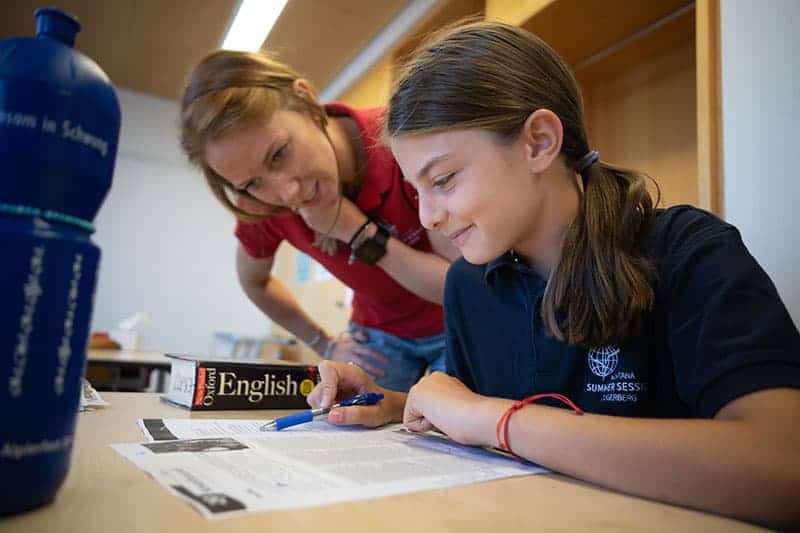
O que é educação bilíngue?
O comportamento e as percepções humanas são mediados pela nossa linguagem; os códigos que são desvendados quando novas línguas são aprendidas ajudam a criar um novo nível de percepção. O renomado acadêmico e especialista suíço em bilinguismo, François Grosjean, demonstrou como a criança ou o adulto bilíngue não é simplesmente a soma de dois (ou mais) monolíngues; em vez disso, ele ou ela é dono de uma configuração linguística única e específica. O bilíngue gerencia e manipula a atenção para uma língua ou outra, ativa, mas muitas vezes inconscientemente. Suas línguas não apenas coexistem; elas interagem para produzir um sistema completo próprio.
Benefícios da Educação Bilíngue
No mundo globalizado moderno, a educação bilíngue desempenha um papel crucial e oferece vantagens distintas, especialmente para as gerações mais jovens.
1. Cidadãos Globais
Pessoas bilíngues são inestimáveis no mundo de hoje. Elas descobrirão que as perspectivas de emprego se abrem e os horizontes sociais se expandem. Seu envolvimento com o mundo e a sociedade humana em que vivemos é rico; suas mentes são ágeis.
2. Benefícios psicológicos
Além disso, seus atributos vão além da simples tradução de palavras de um código para outro; conhecer bem outra língua traz benefícios psicológicos sutis. Entre eles, a capacidade de ver ambos os lados da história, de apreciar significados mais amplos e de desfrutar de uma ampla gama de compreensão conceitual. Tais atributos são benéficos para o indivíduo envolvido e, crucialmente, contribuem para o objetivo ilusório da harmonia internacional. Bilíngues atuam como construtores de pontes, intermediários que podem explicar uma cultura aos membros da outra e atuar como intermediários entre as duas.
3. Competência linguística
A escolaridade internacional contribuiu para aumentar a proficiência linguística. À medida que as famílias se tornam mais globais e mais jovens viajam para estudar e trabalhar, podem encontrar um futuro parceiro longe do seu país de nascimento, o que resulta em mais famílias multiculturais que partilham várias línguas nos seus lares internacionais. Enquanto nos confrontamos com o predomínio de uma língua em vastas áreas da atividade humana, sendo o inglês a língua 1 ou a língua 2 para muitos, se não para a maioria, desses estudantes, é fascinante observar como isso está a resultar no reconhecimento de cada vez mais versões do inglês. A população de cidadãos globais que partilham os benefícios de várias formas de bilinguismo está a aumentar.
4. Compreender as culturas
Para além dos benefícios funcionais da aprendizagem de línguas, o bilinguismo tem a ver com a compreensão das culturas. Com a criação do seu sistema linguístico único, o bilingue está também a dar sentido à sua relação com ambas as culturas a que o código linguístico deu acesso. Ao mesmo tempo que gere a sua atenção para este código, o seu vocabulário e a sua sintaxe, o bilingue estará a prestar atenção às variantes culturais entre as línguas. Está constantemente a combinar e a misturar aspectos das culturas em que vive, fazendo escolhas linguísticas e culturais de acordo com as necessidades da circunstância.
O resultado é um "espaço entre", como o habitat das crianças da terceira cultura. A ideia das crianças da terceira cultura foi desenvolvida para se referir a crianças que crescem fora dos países de origem dos seus pais (que eram frequentemente eles próprios expatriados). Tornam-se parte de uma terceira cultura, em vez de uma que deriva de uma simples mistura dos países de origem e de acolhimento.
Bilinguals as Bridge Builders
Francois Grosjean points out that bilinguals who are allowed to be who they are, and to accept their dual (or multiple) lived experiences, are invaluable members of society who bridge the gap between the cultures they belong to. This is an important role played by the sort of educational provision to be found at Institut Montana.
Continue reading
Bilinguals as Bridge Builders
Francois Grosjean points out that bilinguals who are allowed to be who they are, and to accept their dual (or multiple) lived experiences, are invaluable members of society who bridge the gap between the cultures they belong to. This is an important role played by the sort of educational provision to be found at Institut Montana.
Continue reading
A sala de aula bilingue
A sala de aula bilingue é um lugar inspirador. Só o facto de vermos os trabalhos escolares das crianças em exposição, com legendas e etiquetas que demonstram proficiência em duas línguas, é um estímulo para a mente. Mas isso não acontece por si só e a qualidade pura do ensino é fundamental - cada criança tem de se sentir feliz e confiante para estar aberta aos desafios, bem como aos benefícios da aprendizagem bilingue. A investigação sobre o cérebro bilingue está a orientar os métodos de ensino. Sabe-se agora que estas crianças utilizam ambas as línguas para dar sentido ao mundo; são muito adaptáveis, aprofundando a sua compreensão da primeira língua enquanto adquirem a segunda; e o processo tem efeitos positivos importantes noutros aspectos do desenvolvimento cognitivo, como a gestão da atenção.
A Tradition of International Education
The Bilingual Elementary section of Institut Montana has the school’s long history of international education on which to draw, as well as the dedication and expertise of its staff. Teaching in the bilingual classroom requires a thorough approach, with plenty of individual assessment and on-going help. Quality teaching comes from using evidence-based principles of instruction, such as teacher modelling and verbalizations, guided practice, and brisk lesson pacing to maintain student engagement.
Continue reading
Tailored Support for Every Child
The Montana Elementary school classrooms are tucked away in a pretty corner of the magnificent Institut Montana campus. As soon as a new child arrives, their language needs are quickly assessed and appropriate support organised. It might be that the child has some skills but needs in-class support to benefit fully from the lesson. In this case, teachers deploy the integrative EAL (for English) or DaZ (for German) programme where support is provided by an additional teacher within the normal classroom following the standard lessons. If the child would benefit from more intensive language tuition, they receive help specially tailored to their needs. For half of the English or German language lessons, they work with an extra teacher outside the classroom so that they quickly learn the foundational skills to enable rapid progress in the new language and find the subject matter within their reach. For the other half they continue to participate in normal lessons so that they can interact with their peers.
Continue reading
Balancing Languages and Identities
In this multi-lingual group of young learners, it is important not to hold up one language, and therefore cultural identity, as superior to another. Seeing one of the languages and its culture as the dominant one is counter-productive to the cultural harmony the bilingual classroom seeks to promote, even when the curriculum followed belongs to one of the languages. The Institut Montana Bilingual Elementary School follows the curriculum of its home country, Switzerland, but the balance between the two languages is scrupulously maintained. Teaching is distributed at 50% of the time for each language. Each academic year the groups change Class Advisors, swapping between German and English speaking, so there is a further balance in exposure to both languages.
Continue reading
A Tradition of International Education
The Bilingual Elementary section of Institut Montana has the school’s long history of international education on which to draw, as well as the dedication and expertise of its staff. Teaching in the bilingual classroom requires a thorough approach, with plenty of individual assessment and on-going help. Quality teaching comes from using evidence-based principles of instruction, such as teacher modelling and verbalizations, guided practice, and brisk lesson pacing to maintain student engagement.
Continue reading
Tailored Support for Every Child
The Montana Elementary school classrooms are tucked away in a pretty corner of the magnificent Institut Montana campus. As soon as a new child arrives, their language needs are quickly assessed and appropriate support organised. It might be that the child has some skills but needs in-class support to benefit fully from the lesson. In this case, teachers deploy the integrative EAL (for English) or DaZ (for German) programme where support is provided by an additional teacher within the normal classroom following the standard lessons. If the child would benefit from more intensive language tuition, they receive help specially tailored to their needs. For half of the English or German language lessons, they work with an extra teacher outside the classroom so that they quickly learn the foundational skills to enable rapid progress in the new language and find the subject matter within their reach. For the other half they continue to participate in normal lessons so that they can interact with their peers.
Continue reading
Balancing Languages and Identities
In this multi-lingual group of young learners, it is important not to hold up one language, and therefore cultural identity, as superior to another. Seeing one of the languages and its culture as the dominant one is counter-productive to the cultural harmony the bilingual classroom seeks to promote, even when the curriculum followed belongs to one of the languages. The Institut Montana Bilingual Elementary School follows the curriculum of its home country, Switzerland, but the balance between the two languages is scrupulously maintained. Teaching is distributed at 50% of the time for each language. Each academic year the groups change Class Advisors, swapping between German and English speaking, so there is a further balance in exposure to both languages.
Continue reading
Um futuro brilhante
Não há dúvida de que a aprendizagem de uma nova língua alarga os horizontes e acrescenta uma competência útil. Além disso, traz grandes benefícios cognitivos que, apesar de estarem sujeitos a demasiadas variáveis para serem separados, são reais e significativos.
Pathways to Global Opportunities
At Institut Montana, as they reach the end of their years at the Elementary School, these children greet a world of opportunity. They have the advanced skills in German that open the door to the academically demanding Swiss Matura, which they can choose to study in German or German and English. They can embark on the route towards the International Baccalaureate Diploma, a passport to universities all over the world. Or they can continue their bilingual studies at the Bilingual Secondary School while assessing where their ambitions might take them.
Continue reading
Pathways to Global Opportunities
At Institut Montana, as they reach the end of their years at the Elementary School, these children greet a world of opportunity. They have the advanced skills in German that open the door to the academically demanding Swiss Matura, which they can choose to study in German or German and English. They can embark on the route towards the International Baccalaureate Diploma, a passport to universities all over the world. Or they can continue their bilingual studies at the Bilingual Secondary School while assessing where their ambitions might take them.
Continue reading
Resumo
As crianças que se juntam para aprender, brincar e colaborar num espaço onde duas línguas são moeda comum criam um espaço híbrido com uma cultura que não pertence nem a uma nem a outra. A sala de aula bilingue é um espaço de inclusão, onde se lança uma nova luz sobre as ideias de identidade cultural. Os seus alunos serão os cidadãos globais de amanhã, adultos de mente aberta e perspicazes, capazes de partilhar e discutir conhecimentos num ambiente multicultural e totalmente à vontade numa reunião internacional do Zoom. Para estas crianças brilhantes, o futuro é risonho.
O que as escolas dizem
Escolas com experiência prática neste tópico compartilham sua perspectiva.
Bilinguals as Bridge Builders
Francois Grosjean points out that bilinguals who are allowed to be who they are, and to accept their dual (or multiple) lived experiences, are invaluable members of society who bridge the gap between the cultures they belong to. This is an important role played by the sort of educational provision to be found at Institut Montana.
Continue reading
A Tradition of International Education
The Bilingual Elementary section of Institut Montana has the school’s long history of international education on which to draw, as well as the dedication and expertise of its staff. Teaching in the bilingual classroom requires a thorough approach, with plenty of individual assessment and on-going help. Quality teaching comes from using evidence-based principles of instruction, such as teacher modelling and verbalizations, guided practice, and brisk lesson pacing to maintain student engagement.
Continue reading
Tailored Support for Every Child
The Montana Elementary school classrooms are tucked away in a pretty corner of the magnificent Institut Montana campus. As soon as a new child arrives, their language needs are quickly assessed and appropriate support organised. It might be that the child has some skills but needs in-class support to benefit fully from the lesson. In this case, teachers deploy the integrative EAL (for English) or DaZ (for German) programme where support is provided by an additional teacher within the normal classroom following the standard lessons. If the child would benefit from more intensive language tuition, they receive help specially tailored to their needs. For half of the English or German language lessons, they work with an extra teacher outside the classroom so that they quickly learn the foundational skills to enable rapid progress in the new language and find the subject matter within their reach. For the other half they continue to participate in normal lessons so that they can interact with their peers.
Continue reading
Balancing Languages and Identities
In this multi-lingual group of young learners, it is important not to hold up one language, and therefore cultural identity, as superior to another. Seeing one of the languages and its culture as the dominant one is counter-productive to the cultural harmony the bilingual classroom seeks to promote, even when the curriculum followed belongs to one of the languages. The Institut Montana Bilingual Elementary School follows the curriculum of its home country, Switzerland, but the balance between the two languages is scrupulously maintained. Teaching is distributed at 50% of the time for each language. Each academic year the groups change Class Advisors, swapping between German and English speaking, so there is a further balance in exposure to both languages.
Continue reading

Alexander Peipers é o cofundador e diretor executivo da World Schools e Acampamentos Mundiaisonde lidera a missão de fornecer às famílias uma orientação fiável na escolha de escolas e programas que promovam a excelência académica, a diversidade cultural e o desenvolvimento holístico.
Encontre sua nova escola
Localização
Em qualquer lugar
Tipo de escola
Qualquer escola