

Zweisprachigkeit ist ein schwierig zu erforschendes Gebiet, ein dichter Wald verwirrender Variablen, von denen Stichproben, Bildungsniveau, verwendete Aufgaben, Unterschiede in den Sprachen selbst und unterschiedliche Ergebnisse bei verschiedenen Sprachkombinationen nur einige sind. Es gibt jedoch Anhaltspunkte dafür, dass die Beherrschung von mehr als einer Sprache nicht nur kognitive Vorteile mit sich bringt, sondern auch die Chancen erhöht. Erkenntnisse aus der Neurologie haben den Spracherwerb mit strukturellen Veränderungen im Gehirn in Verbindung gebracht, die exekutive Funktionen wie kognitive Flexibilität, kreatives Denken und Aufmerksamkeitsmanagement unterstützen.
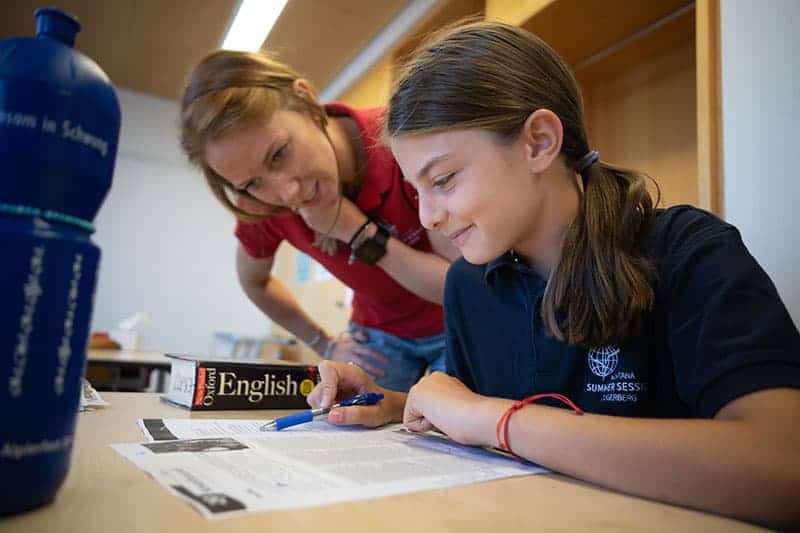
Was ist zweisprachige Erziehung?
Menschliches Verhalten und Wahrnehmung werden durch unsere Sprache vermittelt; die beim Erlernen neuer Sprachen freigesetzten Codes tragen dazu bei, eine neue Wahrnehmungsebene zu schaffen. Der führende Schweizer Wissenschaftler und Experte für Zweisprachigkeit, François Grosjean, hat gezeigt, dass ein zweisprachiges Kind oder ein zweisprachiger Erwachsener nicht einfach die Summe zweier (oder mehrerer) Einsprachiger ist, sondern vielmehr über eine einzigartige und spezifische sprachliche Konfiguration verfügt. Der Zweisprachige steuert und manipuliert die Aufmerksamkeit für die eine oder andere Sprache – aktiv, aber oft unbewusst. Ihre Sprachen existieren nicht nur nebeneinander; sie interagieren und bilden ein eigenständiges, vollständiges System.
Vorteile der zweisprachigen Erziehung
In der modernen globalisierten Welt spielt die zweisprachige Erziehung eine entscheidende Rolle und bietet insbesondere den jüngeren Generationen deutliche Vorteile.
1. Weltbürger
Zweisprachige Menschen sind in der heutigen Welt von unschätzbarem Wert. Sie eröffnen sich neue Beschäftigungsmöglichkeiten und erweitern ihren sozialen Horizont. Ihr Engagement für die Welt und die Gesellschaft, in der wir leben, ist intensiv; ihr Geist ist beweglich.
2. Psychologischer Nutzen
Darüber hinaus gehen ihre Fähigkeiten über die bloße Übersetzung von Wörtern von einem Code in einen anderen hinaus; die Beherrschung einer anderen Sprache bringt subtile psychologische Vorteile mit sich. Dazu gehört die Fähigkeit, beide Seiten einer Geschichte zu sehen, erweiterte Bedeutungen zu erfassen und ein breites konzeptionelles Verständnis zu entwickeln. Solche Eigenschaften sind für den Einzelnen von Vorteil und tragen entscheidend zum schwer erreichbaren Ziel internationaler Harmonie bei. Zweisprachige Menschen fungieren als Brückenbauer, als Vermittler, die den Mitgliedern einer Kultur die andere erklären und zwischen beiden vermitteln können.
3. Sprachkenntnisse
Die internationale Schulbildung hat dazu beigetragen, die Sprachkenntnisse zu verbessern. Da die Familien immer globaler werden und immer mehr junge Menschen für ihr Studium und ihre Arbeit auf Reisen gehen, treffen sie vielleicht einen zukünftigen Partner weit weg von ihrem Geburtsland, was dazu führt, dass immer mehr multikulturelle Familien mehrere Sprachen in ihren internationalen Haushalten teilen. Während wir mit der Dominanz einer Sprache in weiten Bereichen menschlicher Aktivitäten konfrontiert sind, mit Englisch als Sprache 1 oder Sprache 2 für viele, wenn nicht sogar die meisten dieser Studenten, ist es faszinierend zu beobachten, wie dies dazu führt, dass mehr und mehr Versionen des Englischen anerkannt werden. Die Zahl der Weltbürger, die von den Vorteilen der verschiedenen Formen der Zweisprachigkeit profitieren, nimmt zu.
4. Kulturelles Verständnis
Abgesehen von den funktionalen Vorteilen des Sprachenlernens geht es bei der Zweisprachigkeit auch um das Verständnis der Kulturen. Mit der Schaffung seines einzigartigen Sprachsystems macht der Zweisprachige auch seine Beziehung zu den beiden Kulturen deutlich, zu denen der sprachliche Code Zugang gefunden hat. Während der Zweisprachige seine Aufmerksamkeit auf diesen Code, sein Vokabular und seine Syntax lenkt, achtet er gleichzeitig auf die kulturellen Varianten zwischen den beiden Sprachen. Er kombiniert und vermischt ständig Aspekte der Kulturen, in denen er lebt, und trifft je nach den Erfordernissen der Situation sprachliche und kulturelle Entscheidungen.
Das Ergebnis ist ein "Zwischenraum", wie der Lebensraum der Third Culture Kids. Die Idee der Third Culture Kids wurde entwickelt, um sich auf Kinder zu beziehen, die außerhalb der Heimatländer ihrer Eltern aufwachsen (die oft selbst Expatriates waren). Sie werden Teil einer dritten Kultur und nicht einer, die sich aus einer einfachen Mischung aus Heimat- und Gastland ergibt.
Bilinguals as Bridge Builders
Francois Grosjean points out that bilinguals who are allowed to be who they are, and to accept their dual (or multiple) lived experiences, are invaluable members of society who bridge the gap between the cultures they belong to. This is an important role played by the sort of educational provision to be found at Institut Montana.
Continue reading
Bilinguals as Bridge Builders
Francois Grosjean points out that bilinguals who are allowed to be who they are, and to accept their dual (or multiple) lived experiences, are invaluable members of society who bridge the gap between the cultures they belong to. This is an important role played by the sort of educational provision to be found at Institut Montana.
Continue reading
Das zweisprachige Klassenzimmer
Das zweisprachige Klassenzimmer ist ein inspirierender Ort. Allein der Anblick der ausgestellten Schularbeiten der Kinder, die mit Beschriftungen und Etiketten versehen sind, die die Beherrschung von zwei Sprachen zeigen, erweitert den Geist. Aber das geschieht nicht von selbst, und die Qualität des Unterrichts ist entscheidend - jedes Kind muss sich wohlfühlen und selbstbewusst sein, damit es den Herausforderungen und Vorteilen des zweisprachigen Lernens offen gegenübersteht. Die Erforschung des zweisprachigen Gehirns gibt den Lehrmethoden die Richtung vor. Man weiß jetzt, dass diese Kinder beide Sprachen benutzen, um sich einen Sinn in der Welt zu verschaffen; sie sind sehr lernfähig, vertiefen ihr Verständnis der ersten Sprache, während sie sich die zweite aneignen; und der Prozess hat wichtige positive Auswirkungen auf andere Aspekte der kognitiven Entwicklung, wie z. B. das Aufmerksamkeitsmanagement.
A Tradition of International Education
The Bilingual Elementary section of Institut Montana has the school’s long history of international education on which to draw, as well as the dedication and expertise of its staff. Teaching in the bilingual classroom requires a thorough approach, with plenty of individual assessment and on-going help. Quality teaching comes from using evidence-based principles of instruction, such as teacher modelling and verbalizations, guided practice, and brisk lesson pacing to maintain student engagement.
Continue reading
Tailored Support for Every Child
The Montana Elementary school classrooms are tucked away in a pretty corner of the magnificent Institut Montana campus. As soon as a new child arrives, their language needs are quickly assessed and appropriate support organised. It might be that the child has some skills but needs in-class support to benefit fully from the lesson. In this case, teachers deploy the integrative EAL (for English) or DaZ (for German) programme where support is provided by an additional teacher within the normal classroom following the standard lessons. If the child would benefit from more intensive language tuition, they receive help specially tailored to their needs. For half of the English or German language lessons, they work with an extra teacher outside the classroom so that they quickly learn the foundational skills to enable rapid progress in the new language and find the subject matter within their reach. For the other half they continue to participate in normal lessons so that they can interact with their peers.
Continue reading
Balancing Languages and Identities
In this multi-lingual group of young learners, it is important not to hold up one language, and therefore cultural identity, as superior to another. Seeing one of the languages and its culture as the dominant one is counter-productive to the cultural harmony the bilingual classroom seeks to promote, even when the curriculum followed belongs to one of the languages. The Institut Montana Bilingual Elementary School follows the curriculum of its home country, Switzerland, but the balance between the two languages is scrupulously maintained. Teaching is distributed at 50% of the time for each language. Each academic year the groups change Class Advisors, swapping between German and English speaking, so there is a further balance in exposure to both languages.
Continue reading
A Tradition of International Education
The Bilingual Elementary section of Institut Montana has the school’s long history of international education on which to draw, as well as the dedication and expertise of its staff. Teaching in the bilingual classroom requires a thorough approach, with plenty of individual assessment and on-going help. Quality teaching comes from using evidence-based principles of instruction, such as teacher modelling and verbalizations, guided practice, and brisk lesson pacing to maintain student engagement.
Continue reading
Tailored Support for Every Child
The Montana Elementary school classrooms are tucked away in a pretty corner of the magnificent Institut Montana campus. As soon as a new child arrives, their language needs are quickly assessed and appropriate support organised. It might be that the child has some skills but needs in-class support to benefit fully from the lesson. In this case, teachers deploy the integrative EAL (for English) or DaZ (for German) programme where support is provided by an additional teacher within the normal classroom following the standard lessons. If the child would benefit from more intensive language tuition, they receive help specially tailored to their needs. For half of the English or German language lessons, they work with an extra teacher outside the classroom so that they quickly learn the foundational skills to enable rapid progress in the new language and find the subject matter within their reach. For the other half they continue to participate in normal lessons so that they can interact with their peers.
Continue reading
Balancing Languages and Identities
In this multi-lingual group of young learners, it is important not to hold up one language, and therefore cultural identity, as superior to another. Seeing one of the languages and its culture as the dominant one is counter-productive to the cultural harmony the bilingual classroom seeks to promote, even when the curriculum followed belongs to one of the languages. The Institut Montana Bilingual Elementary School follows the curriculum of its home country, Switzerland, but the balance between the two languages is scrupulously maintained. Teaching is distributed at 50% of the time for each language. Each academic year the groups change Class Advisors, swapping between German and English speaking, so there is a further balance in exposure to both languages.
Continue reading
Eine strahlende Zukunft
Es besteht kein Zweifel, dass das Erlernen einer neuen Sprache den Horizont erweitert und eine nützliche Fähigkeit hinzufügt. Darüber hinaus bringt es große kognitive Vorteile mit sich, die, obwohl sie von zu vielen Variablen abhängen, um sie auseinander zu halten, real und bedeutsam sind.
Pathways to Global Opportunities
At Institut Montana, as they reach the end of their years at the Elementary School, these children greet a world of opportunity. They have the advanced skills in German that open the door to the academically demanding Swiss Matura, which they can choose to study in German or German and English. They can embark on the route towards the International Baccalaureate Diploma, a passport to universities all over the world. Or they can continue their bilingual studies at the Bilingual Secondary School while assessing where their ambitions might take them.
Continue reading
Pathways to Global Opportunities
At Institut Montana, as they reach the end of their years at the Elementary School, these children greet a world of opportunity. They have the advanced skills in German that open the door to the academically demanding Swiss Matura, which they can choose to study in German or German and English. They can embark on the route towards the International Baccalaureate Diploma, a passport to universities all over the world. Or they can continue their bilingual studies at the Bilingual Secondary School while assessing where their ambitions might take them.
Continue reading
Zusammenfassung
Wenn Kinder zusammenkommen, um in einem Raum zu lernen, zu spielen und zusammenzuarbeiten, in dem zwei Sprachen die gemeinsame Währung sind, entsteht ein hybrider Raum mit einer Kultur, die weder zu der einen noch zu der anderen gehört. Das zweisprachige Klassenzimmer ist ein Raum der Inklusion, in dem ein neues Licht auf die Vorstellungen von kultureller Identität geworfen wird. Die Schülerinnen und Schüler werden die Weltbürger von morgen sein, aufgeschlossene und verständnisvolle Erwachsene, die in einem multikulturellen Umfeld Wissen weitergeben und diskutieren können und sich in einem internationalen Zoom-Treffen wohlfühlen. Für diese aufgeweckten Kinder ist die Zukunft rosig.
Was Schulen sagen
Schulen mit praktischer Erfahrung in diesem Thema teilen ihre Perspektive.
Bilinguals as Bridge Builders
Francois Grosjean points out that bilinguals who are allowed to be who they are, and to accept their dual (or multiple) lived experiences, are invaluable members of society who bridge the gap between the cultures they belong to. This is an important role played by the sort of educational provision to be found at Institut Montana.
Continue reading
A Tradition of International Education
The Bilingual Elementary section of Institut Montana has the school’s long history of international education on which to draw, as well as the dedication and expertise of its staff. Teaching in the bilingual classroom requires a thorough approach, with plenty of individual assessment and on-going help. Quality teaching comes from using evidence-based principles of instruction, such as teacher modelling and verbalizations, guided practice, and brisk lesson pacing to maintain student engagement.
Continue reading
Tailored Support for Every Child
The Montana Elementary school classrooms are tucked away in a pretty corner of the magnificent Institut Montana campus. As soon as a new child arrives, their language needs are quickly assessed and appropriate support organised. It might be that the child has some skills but needs in-class support to benefit fully from the lesson. In this case, teachers deploy the integrative EAL (for English) or DaZ (for German) programme where support is provided by an additional teacher within the normal classroom following the standard lessons. If the child would benefit from more intensive language tuition, they receive help specially tailored to their needs. For half of the English or German language lessons, they work with an extra teacher outside the classroom so that they quickly learn the foundational skills to enable rapid progress in the new language and find the subject matter within their reach. For the other half they continue to participate in normal lessons so that they can interact with their peers.
Continue reading
Balancing Languages and Identities
In this multi-lingual group of young learners, it is important not to hold up one language, and therefore cultural identity, as superior to another. Seeing one of the languages and its culture as the dominant one is counter-productive to the cultural harmony the bilingual classroom seeks to promote, even when the curriculum followed belongs to one of the languages. The Institut Montana Bilingual Elementary School follows the curriculum of its home country, Switzerland, but the balance between the two languages is scrupulously maintained. Teaching is distributed at 50% of the time for each language. Each academic year the groups change Class Advisors, swapping between German and English speaking, so there is a further balance in exposure to both languages.
Continue reading

Alexander Peipers ist der Mitbegründer und CEO von World Schools Und Weltweite CampsEr hat es sich zur Aufgabe gemacht, Familien bei der Auswahl von Schulen und Programmen, die akademische Spitzenleistungen, kulturelle Vielfalt und ganzheitliche Entwicklung fördern, zuverlässig zu beraten.
Finde deine neue Schule
Standort
Überall
Schultyp
Jede Schule