バイリンガリズムは研究が難しい分野であり、サンプリング、教育レベル、使用されるタスク、言語自体のバリエーション、言語の組み合わせによる結果の違いなど、交絡変数がうっそうと茂る森である。しかし、2つ以上の言語に精通することで、機会が増えるだけでなく、認知的なメリットも得られるという証拠がある。神経学の研究では、言語習得と、認知的柔軟性、創造的思考、注意管理などの実行機能を助ける脳の構造的変化とが関連している。

Why is bilingual education important

バイリンガル教育はなぜ重要なのでしょうか?

World Schools
なぜバイリンガル教育が重要なのか

バイリンガリズムは研究が難しい分野であり、サンプリング、教育レベル、使用されるタスク、言語自体のバリエーション、言語の組み合わせによる結果の違いなど、交絡変数がうっそうと茂る森である。しかし、2つ以上の言語に精通することで、機会が増えるだけでなく、認知的なメリットも得られるという証拠がある。神経学の研究では、言語習得と、認知的柔軟性、創造的思考、注意管理などの実行機能を助ける脳の構造的変化とが関連している。

バイリンガル教育とは何ですか?

人間の行動と認識は言語を介して媒介されます。新しい言語を学ぶことで解き放たれるコードは、新たなレベルの認識を生み出すのに役立ちます。スイスの著名な学者でありバイリンガリズムの専門家であるフランソワ・グロジャンは、バイリンガルの子供や大人は、単に2人(あるいはそれ以上)のモノリンガルの集合体ではなく、独自の言語構成の持ち主であることを示しました。バイリンガルは、能動的に、しかししばしば無意識のうちに、どちらかの言語への注意を管理し、操作します。彼らの言語は共存するだけでなく、相互作用することで、独自の完全なシステムを形成します。

バイリンガル教育のメリット

現代のグローバル化した世界では、バイリンガル教育は重要な役割を果たし、特に若い世代に明確な利点をもたらします。

1. 地球市民

バイリンガルの人々は、今日の世界においてかけがえのない存在です。彼らは就職の見通しが開け、社会的な視野が広がることに気づくでしょう。彼らは世界や私たちが暮らす人間社会との関わりが豊かで、思考力も鋭敏です。

2.心理的メリット

さらに、バイリンガルの特質は、単に言葉をあるコードから別のコードに翻訳するだけにとどまりません。別の言語に精通することは、微妙な心理的メリットをもたらします。これには、物事の両面を見通す能力、拡張された意味を理解する能力、幅広い概念的理解を楽しむ能力などが含まれます。こうした特質は、当事者にとって有益であるだけでなく、国際協調という実現困難な目標の達成にも大きく貢献します。バイリンガルは、橋渡し役、つまり、ある文化を別の文化の人々に説明し、両者の仲介役を務める仲介者として機能します。

3.語学力

国際的な学校教育は言語能力を高めるのに役立っている。家庭がよりグローバルになり、学業や仕事のために旅行する若者が増えるにつれ、生まれた国から遠く離れた場所で将来のパートナーと出会うかもしれない。人間の活動の幅広い領域で、英語が第1言語または第2言語として、多くの学生にとって1つの言語が支配的であることに直面しているが、その結果、より多くの英語のバージョンが認識されるようになっていることは興味深い。様々な形のバイリンガリズムの恩恵を共有するグローバル市民は、ますます増えている。

4.文化を理解する

言語学習の機能的な利点に加え、バイリンガリズムは文化を理解することでもある。独自の言語体系を構築することで、バイリンガルは、言語コードによってアクセスできるようになった両方の文化との関係を理解することになる。このコード、語彙、構文に注意を払うと同時に、バイリンガルは言語間の文化的差異にも注意を払う。バイリンガルは、常に自分が生きている文化の側面を組み合わせ、融合させながら、状況に応じて言語的・文化的な選択をしているのである。

その結果、サードカルチャー・キッズの生息地のような「狭間」が生まれる。サード・カルチャー・キッズという考え方は、両親(両親自身が海外駐在員であることも多い)の母国以外で育つ子供たちのことを指す。子供たちは、母国とホスト国の単純なミックスから生まれる文化ではなく、第三の文化の一部となる。

Bilinguals as Bridge Builders
Francois Grosjean points out that bilinguals who are allowed to be who they are, and to accept their dual (or multiple) lived experiences, are invaluable members of society who bridge the gap between the cultures they belong to. This is an important role played by the sort of educational provision to be found at Institut Montana.
Continue reading
Bilinguals as Bridge Builders
Francois Grosjean points out that bilinguals who are allowed to be who they are, and to accept their dual (or multiple) lived experiences, are invaluable members of society who bridge the gap between the cultures they belong to. This is an important role played by the sort of educational provision to be found at Institut Montana.
Continue reading

バイリンガルクラスルーム

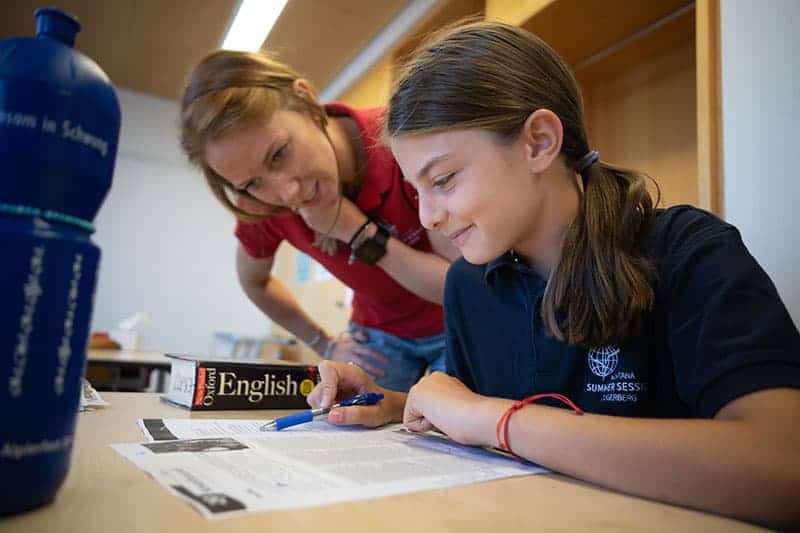
バイリンガルクラスルームは感動的な場所だ。子どもたちの学校での勉強が、2つの言語に堪能であることを示すキャプションやラベル付きで展示されているのを見るだけで、心が躍る。子どもたちは皆、バイリンガルで学ぶことの利点だけでなく、挑戦することに前向きであることに喜びと自信を感じなければならない。バイリンガルの脳に関する研究は、指導法を導いている。現在では、バイリンガルの子どもたちは両方の言語を使って世界を理解すること、適応力が非常に高く、第一言語の理解を深めながら第二言語を習得すること、そしてその過程が注意力の管理など認知発達の他の側面にも重要な良い影響を与えることが理解されている。

A Tradition of International Education
The Bilingual Elementary section of Institut Montana has the school’s long history of international education on which to draw, as well as the dedication and expertise of its staff. Teaching in the bilingual classroom requires a thorough approach, with plenty of individual assessment and on-going help. Quality teaching comes from using evidence-based principles of instruction, such as teacher modelling and verbalizations, guided practice, and brisk lesson pacing to maintain student engagement.
Continue reading
Tailored Support for Every Child
The Montana Elementary school classrooms are tucked away in a pretty corner of the magnificent Institut Montana campus. As soon as a new child arrives, their language needs are quickly assessed and appropriate support organised. It might be that the child has some skills but needs in-class support to benefit fully from the lesson. In this case, teachers deploy the integrative EAL (for English) or DaZ (for German) programme where support is provided by an additional teacher within the normal classroom following the standard lessons. If the child would benefit from more intensive language tuition, they receive help specially tailored to their needs. For half of the English or German language lessons, they work with an extra teacher outside the classroom so that they quickly learn the foundational skills to enable rapid progress in the new language and find the subject matter within their reach. For the other half they continue to participate in normal lessons so that they can interact with their peers.
Continue reading
Balancing Languages and Identities
In this multi-lingual group of young learners, it is important not to hold up one language, and therefore cultural identity, as superior to another. Seeing one of the languages and its culture as the dominant one is counter-productive to the cultural harmony the bilingual classroom seeks to promote, even when the curriculum followed belongs to one of the languages. The Institut Montana Bilingual Elementary School follows the curriculum of its home country, Switzerland, but the balance between the two languages is scrupulously maintained. Teaching is distributed at 50% of the time for each language. Each academic year the groups change Class Advisors, swapping between German and English speaking, so there is a further balance in exposure to both languages.
Continue reading
A Tradition of International Education
The Bilingual Elementary section of Institut Montana has the school’s long history of international education on which to draw, as well as the dedication and expertise of its staff. Teaching in the bilingual classroom requires a thorough approach, with plenty of individual assessment and on-going help. Quality teaching comes from using evidence-based principles of instruction, such as teacher modelling and verbalizations, guided practice, and brisk lesson pacing to maintain student engagement.
Continue reading
Tailored Support for Every Child
The Montana Elementary school classrooms are tucked away in a pretty corner of the magnificent Institut Montana campus. As soon as a new child arrives, their language needs are quickly assessed and appropriate support organised. It might be that the child has some skills but needs in-class support to benefit fully from the lesson. In this case, teachers deploy the integrative EAL (for English) or DaZ (for German) programme where support is provided by an additional teacher within the normal classroom following the standard lessons. If the child would benefit from more intensive language tuition, they receive help specially tailored to their needs. For half of the English or German language lessons, they work with an extra teacher outside the classroom so that they quickly learn the foundational skills to enable rapid progress in the new language and find the subject matter within their reach. For the other half they continue to participate in normal lessons so that they can interact with their peers.
Continue reading
Balancing Languages and Identities
In this multi-lingual group of young learners, it is important not to hold up one language, and therefore cultural identity, as superior to another. Seeing one of the languages and its culture as the dominant one is counter-productive to the cultural harmony the bilingual classroom seeks to promote, even when the curriculum followed belongs to one of the languages. The Institut Montana Bilingual Elementary School follows the curriculum of its home country, Switzerland, but the balance between the two languages is scrupulously maintained. Teaching is distributed at 50% of the time for each language. Each academic year the groups change Class Advisors, swapping between German and English speaking, so there is a further balance in exposure to both languages.
Continue reading

明るい未来

新しい言語を学ぶことで視野が広がり、有用なスキルが身につくことは間違いない。さらに、多くの変数に左右され切り離すことはできないが、現実的で意味のある大きな認知的利益をもたらす。

Pathways to Global Opportunities
At Institut Montana, as they reach the end of their years at the Elementary School, these children greet a world of opportunity. They have the advanced skills in German that open the door to the academically demanding Swiss Matura, which they can choose to study in German or German and English. They can embark on the route towards the International Baccalaureate Diploma, a passport to universities all over the world. Or they can continue their bilingual studies at the Bilingual Secondary School while assessing where their ambitions might take them.
Continue reading
Pathways to Global Opportunities
At Institut Montana, as they reach the end of their years at the Elementary School, these children greet a world of opportunity. They have the advanced skills in German that open the door to the academically demanding Swiss Matura, which they can choose to study in German or German and English. They can embark on the route towards the International Baccalaureate Diploma, a passport to universities all over the world. Or they can continue their bilingual studies at the Bilingual Secondary School while assessing where their ambitions might take them.
Continue reading

まとめ

2つの言語が共通の通貨である空間で、子どもたちが一緒に学び、遊び、協力することで、どちらにも属さない文化を持つハイブリッドな空間が生まれる。バイリンガルクラスルームは、文化的アイデンティティに関する考え方に新たな光を当てる、包括性のための空間である。この教室で学ぶ生徒たちは、明日の世界市民となり、多文化環境の中で知識を共有し議論することに長け、国際的なズーム会議でもまったく違和感のない、視野の広い洞察力のある大人となる。聡明な子供たちにとって、未来は明るい。

学校が言うこと

このテーマに関する実践経験を持つ学校がそれぞれの視点を共有します。
Bilinguals as Bridge Builders
Francois Grosjean points out that bilinguals who are allowed to be who they are, and to accept their dual (or multiple) lived experiences, are invaluable members of society who bridge the gap between the cultures they belong to. This is an important role played by the sort of educational provision to be found at Institut Montana.
Continue reading
A Tradition of International Education
The Bilingual Elementary section of Institut Montana has the school’s long history of international education on which to draw, as well as the dedication and expertise of its staff. Teaching in the bilingual classroom requires a thorough approach, with plenty of individual assessment and on-going help. Quality teaching comes from using evidence-based principles of instruction, such as teacher modelling and verbalizations, guided practice, and brisk lesson pacing to maintain student engagement.
Continue reading
Tailored Support for Every Child
The Montana Elementary school classrooms are tucked away in a pretty corner of the magnificent Institut Montana campus. As soon as a new child arrives, their language needs are quickly assessed and appropriate support organised. It might be that the child has some skills but needs in-class support to benefit fully from the lesson. In this case, teachers deploy the integrative EAL (for English) or DaZ (for German) programme where support is provided by an additional teacher within the normal classroom following the standard lessons. If the child would benefit from more intensive language tuition, they receive help specially tailored to their needs. For half of the English or German language lessons, they work with an extra teacher outside the classroom so that they quickly learn the foundational skills to enable rapid progress in the new language and find the subject matter within their reach. For the other half they continue to participate in normal lessons so that they can interact with their peers.
Continue reading
Balancing Languages and Identities
In this multi-lingual group of young learners, it is important not to hold up one language, and therefore cultural identity, as superior to another. Seeing one of the languages and its culture as the dominant one is counter-productive to the cultural harmony the bilingual classroom seeks to promote, even when the curriculum followed belongs to one of the languages. The Institut Montana Bilingual Elementary School follows the curriculum of its home country, Switzerland, but the balance between the two languages is scrupulously maintained. Teaching is distributed at 50% of the time for each language. Each academic year the groups change Class Advisors, swapping between German and English speaking, so there is a further balance in exposure to both languages.
Continue reading
新しい学校を探す
位置
どこでも
位置
学校の種類
どの学校でも
学校の種類

関連記事