

Il bilinguismo è un'area di ricerca difficile, una fitta foresta di variabili confondenti, tra cui il campionamento, i livelli di istruzione, i compiti utilizzati, le variazioni nelle lingue stesse e i diversi risultati derivanti da diverse combinazioni linguistiche, sono solo alcune. Tuttavia, è dimostrato che la competenza in più di una lingua offre vantaggi cognitivi oltre a maggiori opportunità. Le scoperte in campo neurologico hanno messo in relazione l'acquisizione di una lingua con cambiamenti strutturali nel cervello che aiutano le funzioni esecutive come la flessibilità cognitiva, il pensiero creativo e la gestione dell'attenzione.
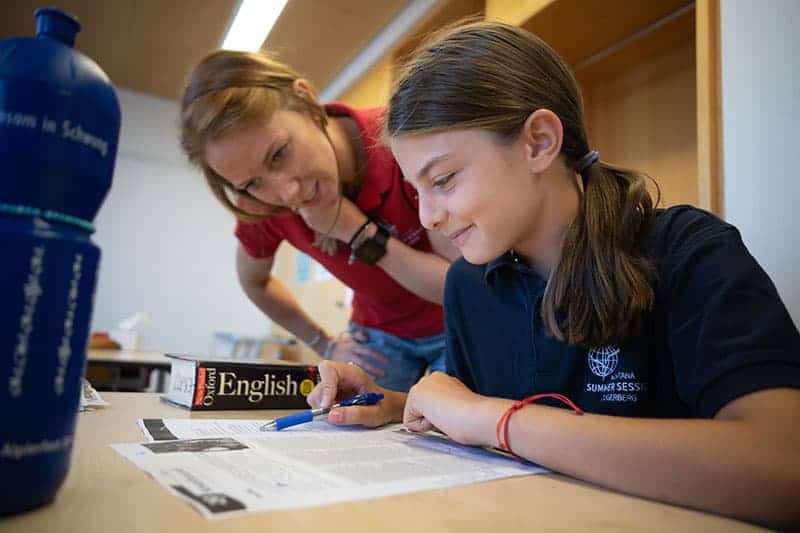
Cos'è l'educazione bilingue?
Il comportamento e le percezioni umane sono mediati dal linguaggio; i codici che si sbloccano quando si apprendono nuove lingue contribuiscono a creare un nuovo livello di percezione. Francois Grosjean, illustre accademico ed esperto svizzero di bilinguismo, ha dimostrato come il bambino o l'adulto bilingue non sia semplicemente la somma di due (o più) monolingui; piuttosto, sia il proprietario di una configurazione linguistica unica e specifica. Il bilingue gestisce e manipola l'attenzione verso una lingua o l'altra, attivamente ma spesso inconsciamente. Le loro lingue non solo coesistono, ma interagiscono per produrre un sistema completo a sé stante.
Benefici dell'educazione bilingue
Nel mondo globalizzato moderno l'educazione bilingue svolge un ruolo cruciale e offre notevoli vantaggi soprattutto alle generazioni più giovani.
1. Cittadini globali
Le persone bilingui hanno un valore inestimabile nel mondo di oggi. Scopriranno che le prospettive di lavoro si aprono e gli orizzonti sociali si ampliano. Il loro coinvolgimento con il mondo e la società umana in cui viviamo è ricco; le loro menti sono agili.
2. Benefici psicologici
Inoltre, le loro capacità vanno oltre la semplice traduzione di parole da un codice all'altro: conoscere bene un'altra lingua apporta sottili benefici psicologici. Tra questi, la capacità di vedere entrambi i lati della storia, di apprezzarne il significato esteso e di godere di un'ampia gamma di comprensione concettuale. Tali capacità sono positive per l'individuo coinvolto e, soprattutto, contribuiscono al raggiungimento di quell'obiettivo sfuggente dell'armonia internazionale. I bilingui agiscono come costruttori di ponti, come intermediari in grado di spiegare una cultura ai membri dell'altra e di fungere da intermediari tra le due.
3. Competenza linguistica
La scolarizzazione internazionale ha contribuito a migliorare le competenze linguistiche. Man mano che le famiglie diventano più globali e che un numero maggiore di giovani viaggia per motivi di studio e di lavoro, potrebbe incontrare un futuro partner lontano dal proprio Paese di nascita, con il risultato di un numero maggiore di famiglie multiculturali che condividono diverse lingue nei loro nuclei familiari internazionali. Mentre ci troviamo di fronte al dominio di una lingua in ampi settori dell'attività umana, con l'inglese come lingua 1 o lingua 2 per molti, se non per la maggior parte, degli studenti, è affascinante notare come ciò si traduca nel riconoscimento di un numero sempre maggiore di versioni dell'inglese. La popolazione di cittadini globali che condividono i benefici di varie forme di bilinguismo è in aumento.
4. Comprendere le culture
Oltre ai benefici funzionali dell'apprendimento delle lingue, il bilinguismo riguarda la comprensione delle culture. Con la creazione di un sistema linguistico unico, il bilingue dà anche un senso al suo rapporto con entrambe le culture a cui il codice linguistico ha dato accesso. Oltre a prestare attenzione a questo codice, al suo vocabolario e alla sua sintassi, il bilingue presterà attenzione alle varianti culturali tra le due lingue. Il bilingue combina e mescola costantemente aspetti delle culture che vive, operando scelte linguistiche e culturali in base alle esigenze della circostanza.
Il risultato è uno "spazio tra", come l'habitat dei Third Culture Kids. L'idea dei Third Culture Kids è stata sviluppata per riferirsi ai bambini che crescono al di fuori dei Paesi di origine dei loro genitori (che spesso erano essi stessi espatriati). Diventano parte di una terza cultura, piuttosto che di una cultura che deriva da un semplice mix tra il Paese d'origine e quello ospitante.
Bilinguals as Bridge Builders
Francois Grosjean points out that bilinguals who are allowed to be who they are, and to accept their dual (or multiple) lived experiences, are invaluable members of society who bridge the gap between the cultures they belong to. This is an important role played by the sort of educational provision to be found at Institut Montana.
Continue reading
Bilinguals as Bridge Builders
Francois Grosjean points out that bilinguals who are allowed to be who they are, and to accept their dual (or multiple) lived experiences, are invaluable members of society who bridge the gap between the cultures they belong to. This is an important role played by the sort of educational provision to be found at Institut Montana.
Continue reading
La classe bilingue
L'aula bilingue è un luogo stimolante. Il solo fatto di vedere i lavori scolastici dei bambini esposti, con didascalie ed etichette che dimostrano la padronanza di due lingue, è un'esperienza che fa crescere la mente. Ma non succede da solo e la qualità pura dell'insegnamento è fondamentale: ogni bambino deve sentirsi felice e sicuro di sé per essere aperto alle sfide e ai benefici dell'apprendimento bilingue. La ricerca sul cervello bilingue sta guidando i metodi di insegnamento. Oggi si è capito che questi bambini usano entrambe le lingue per dare un senso al mondo; sono molto adattivi, approfondiscono la comprensione della prima lingua mentre acquisiscono la seconda; e il processo ha importanti effetti positivi su altri aspetti dello sviluppo cognitivo, come la gestione dell'attenzione.
A Tradition of International Education
The Bilingual Elementary section of Institut Montana has the school’s long history of international education on which to draw, as well as the dedication and expertise of its staff. Teaching in the bilingual classroom requires a thorough approach, with plenty of individual assessment and on-going help. Quality teaching comes from using evidence-based principles of instruction, such as teacher modelling and verbalizations, guided practice, and brisk lesson pacing to maintain student engagement.
Continue reading
Tailored Support for Every Child
The Montana Elementary school classrooms are tucked away in a pretty corner of the magnificent Institut Montana campus. As soon as a new child arrives, their language needs are quickly assessed and appropriate support organised. It might be that the child has some skills but needs in-class support to benefit fully from the lesson. In this case, teachers deploy the integrative EAL (for English) or DaZ (for German) programme where support is provided by an additional teacher within the normal classroom following the standard lessons. If the child would benefit from more intensive language tuition, they receive help specially tailored to their needs. For half of the English or German language lessons, they work with an extra teacher outside the classroom so that they quickly learn the foundational skills to enable rapid progress in the new language and find the subject matter within their reach. For the other half they continue to participate in normal lessons so that they can interact with their peers.
Continue reading
Balancing Languages and Identities
In this multi-lingual group of young learners, it is important not to hold up one language, and therefore cultural identity, as superior to another. Seeing one of the languages and its culture as the dominant one is counter-productive to the cultural harmony the bilingual classroom seeks to promote, even when the curriculum followed belongs to one of the languages. The Institut Montana Bilingual Elementary School follows the curriculum of its home country, Switzerland, but the balance between the two languages is scrupulously maintained. Teaching is distributed at 50% of the time for each language. Each academic year the groups change Class Advisors, swapping between German and English speaking, so there is a further balance in exposure to both languages.
Continue reading
A Tradition of International Education
The Bilingual Elementary section of Institut Montana has the school’s long history of international education on which to draw, as well as the dedication and expertise of its staff. Teaching in the bilingual classroom requires a thorough approach, with plenty of individual assessment and on-going help. Quality teaching comes from using evidence-based principles of instruction, such as teacher modelling and verbalizations, guided practice, and brisk lesson pacing to maintain student engagement.
Continue reading
Tailored Support for Every Child
The Montana Elementary school classrooms are tucked away in a pretty corner of the magnificent Institut Montana campus. As soon as a new child arrives, their language needs are quickly assessed and appropriate support organised. It might be that the child has some skills but needs in-class support to benefit fully from the lesson. In this case, teachers deploy the integrative EAL (for English) or DaZ (for German) programme where support is provided by an additional teacher within the normal classroom following the standard lessons. If the child would benefit from more intensive language tuition, they receive help specially tailored to their needs. For half of the English or German language lessons, they work with an extra teacher outside the classroom so that they quickly learn the foundational skills to enable rapid progress in the new language and find the subject matter within their reach. For the other half they continue to participate in normal lessons so that they can interact with their peers.
Continue reading
Balancing Languages and Identities
In this multi-lingual group of young learners, it is important not to hold up one language, and therefore cultural identity, as superior to another. Seeing one of the languages and its culture as the dominant one is counter-productive to the cultural harmony the bilingual classroom seeks to promote, even when the curriculum followed belongs to one of the languages. The Institut Montana Bilingual Elementary School follows the curriculum of its home country, Switzerland, but the balance between the two languages is scrupulously maintained. Teaching is distributed at 50% of the time for each language. Each academic year the groups change Class Advisors, swapping between German and English speaking, so there is a further balance in exposure to both languages.
Continue reading
Un futuro luminoso
Non c'è dubbio che l'apprendimento di una nuova lingua allarghi gli orizzonti e aggiunga un'utile competenza. Inoltre, apporta grandi benefici cognitivi che, nonostante siano soggetti a troppe variabili da separare, sono reali e significativi.
Pathways to Global Opportunities
At Institut Montana, as they reach the end of their years at the Elementary School, these children greet a world of opportunity. They have the advanced skills in German that open the door to the academically demanding Swiss Matura, which they can choose to study in German or German and English. They can embark on the route towards the International Baccalaureate Diploma, a passport to universities all over the world. Or they can continue their bilingual studies at the Bilingual Secondary School while assessing where their ambitions might take them.
Continue reading
Pathways to Global Opportunities
At Institut Montana, as they reach the end of their years at the Elementary School, these children greet a world of opportunity. They have the advanced skills in German that open the door to the academically demanding Swiss Matura, which they can choose to study in German or German and English. They can embark on the route towards the International Baccalaureate Diploma, a passport to universities all over the world. Or they can continue their bilingual studies at the Bilingual Secondary School while assessing where their ambitions might take them.
Continue reading
Sintesi
I bambini che si riuniscono per imparare, giocare e collaborare in uno spazio in cui le due lingue sono moneta corrente creano uno spazio ibrido con una cultura che non appartiene né all'una né all'altra. L'aula bilingue è uno spazio di inclusione, dove si fa luce sulle idee di identità culturale. I suoi studenti saranno i cittadini globali di domani, adulti di larghe vedute e perspicaci, abili nel condividere e discutere le conoscenze in un ambiente multiculturale e totalmente a proprio agio in una riunione internazionale di Zoom. Per questi bambini brillanti, il futuro è luminoso.
Cosa dicono le scuole
Le scuole con esperienza pratica su questo argomento condividono il loro punto di vista.
Bilinguals as Bridge Builders
Francois Grosjean points out that bilinguals who are allowed to be who they are, and to accept their dual (or multiple) lived experiences, are invaluable members of society who bridge the gap between the cultures they belong to. This is an important role played by the sort of educational provision to be found at Institut Montana.
Continue reading
A Tradition of International Education
The Bilingual Elementary section of Institut Montana has the school’s long history of international education on which to draw, as well as the dedication and expertise of its staff. Teaching in the bilingual classroom requires a thorough approach, with plenty of individual assessment and on-going help. Quality teaching comes from using evidence-based principles of instruction, such as teacher modelling and verbalizations, guided practice, and brisk lesson pacing to maintain student engagement.
Continue reading
Tailored Support for Every Child
The Montana Elementary school classrooms are tucked away in a pretty corner of the magnificent Institut Montana campus. As soon as a new child arrives, their language needs are quickly assessed and appropriate support organised. It might be that the child has some skills but needs in-class support to benefit fully from the lesson. In this case, teachers deploy the integrative EAL (for English) or DaZ (for German) programme where support is provided by an additional teacher within the normal classroom following the standard lessons. If the child would benefit from more intensive language tuition, they receive help specially tailored to their needs. For half of the English or German language lessons, they work with an extra teacher outside the classroom so that they quickly learn the foundational skills to enable rapid progress in the new language and find the subject matter within their reach. For the other half they continue to participate in normal lessons so that they can interact with their peers.
Continue reading
Balancing Languages and Identities
In this multi-lingual group of young learners, it is important not to hold up one language, and therefore cultural identity, as superior to another. Seeing one of the languages and its culture as the dominant one is counter-productive to the cultural harmony the bilingual classroom seeks to promote, even when the curriculum followed belongs to one of the languages. The Institut Montana Bilingual Elementary School follows the curriculum of its home country, Switzerland, but the balance between the two languages is scrupulously maintained. Teaching is distributed at 50% of the time for each language. Each academic year the groups change Class Advisors, swapping between German and English speaking, so there is a further balance in exposure to both languages.
Continue reading

Alexander Peipers è cofondatore e CEO di World Schools E Campi Mondialidove guida la missione di fornire alle famiglie una guida affidabile nella scelta di scuole e programmi che promuovano l'eccellenza accademica, la diversità culturale e lo sviluppo olistico.
Trova la tua nuova scuola
Posizione
Ovunque
Tipo di scuola
Qualsiasi scuola