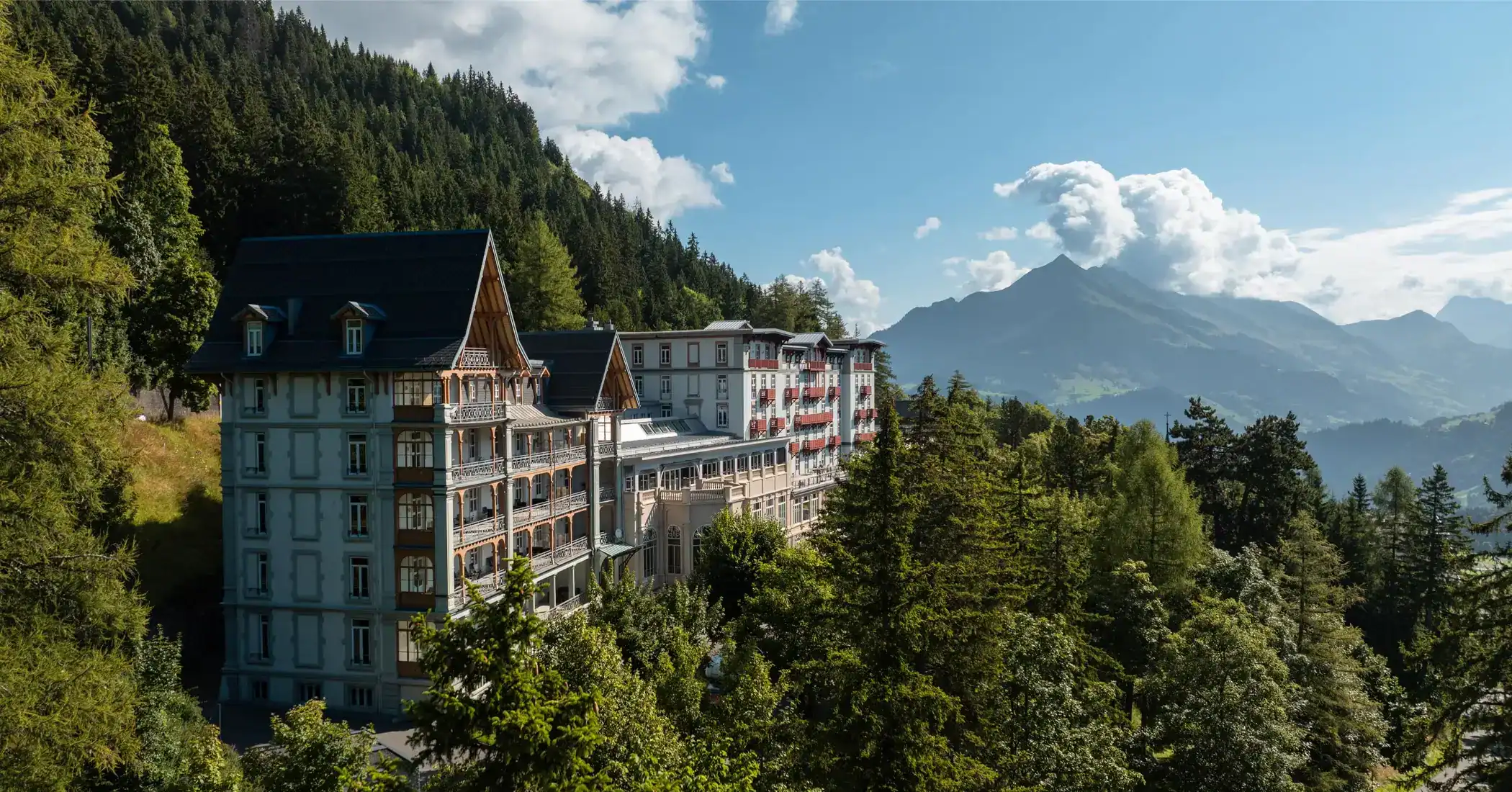
At Leysin American School, experiential learning plays a central role in helping students connect classroom theory with the real world. Our exceptional location in the Swiss Alps gives students the opportunity to move beyond readings and lectures, applying what they have learned through direct observation, data collection, and scientific investigation in one of the world’s most remarkable natural environments. Recently, two of our IB classes headed out into the field for hands-on work that brought their studies to life.
IB Biology: Studying Streams and Meadows in Leysin
Our grade 12 IB Biology and Environmental Systems and Societies students explored ecosystems close to home, right in our home town of Leysin. Their field trip focused on two contrasting environments: a local stream and a nearby meadow, examining both living and non-living elements of each.
In the stream, students sampled macro invertebrates such as mayflies and stoneflies, pollution-sensitive species that serve as indicators of water quality, alongside non-living factors including temperature, pH, dissolved oxygen, turbidity, and flow rate. In the meadow, students measured plant biodiversity by using quadrat sampling to identify and record the species present across randomly placed frames.
Leysin American School students have now studied these areas for four consecutive years, building a long-term picture of how human activity shapes ecosystem health. The stream has been affected by a nearby fish farm and ongoing construction, while agricultural practices in the surrounding landscape have shaped plant biodiversity in the meadow. Both themes connect naturally to the UN’s Sustainable Development Goal 6, which promotes clean water and responsible resource management. After a morning of scientific exploration, students and teachers gathered for a BBQ lunch, where they reviewed and visualized the morning’s data together using a custom-coded app built by an LAS science teacher.
IB Geography: Mapping the Grande-Eau River
Our grade 11 IB Geography students traveled to the Grande-Eau River in nearby Les Diablerets, where they tackled a key milestone in the IB Diploma program: the Internal Assessment (IA). For their IA, students select a research question, conduct fieldwork, gather data, and write a 2,500-word report. This trip gave them the perfect real-world setting to do this!
Within their current Freshwater Module, students have been exploring the Bradshaw Model, a framework describing how river characteristics change from source to mouth. Each student chose three variables to investigate along the Grande-Eau, including velocity, width, depth, discharge, sediment size, roughness, and gradient, collecting data across ten sites along a one-kilometer stretch of the river. Using a web-based app and GIS software, they recorded and analyzed their findings in real time, putting theory directly to the test.
The region itself offers a powerful wider context for this kind of study. The nearby Massif des Diablerets is home to one of the largest glaciers in the Vaud Alps, but like most Alpine glaciers, it has been retreating significantly due to climate change. The glacier’s retreat makes for a compelling case study connecting local fieldwork to broader themes of climate change, alpine ice loss, and ecosystem impact, themes that run through both the Geography and Biology curricula. With fieldwork complete, students will now write up their reports over the summer, with feedback to follow in the new academic year.
The Value of Learning Outside
Both trips reflect Leysin American School’s deep commitment to experiential education. Engaging directly with geographical and ecological processes deepens understanding, builds confidence, sharpens critical thinking, and develops the collaborative skills students will carry into their futures. We are fortunate to be surrounded by the remarkable natural landscapes of the Swiss Alps, and we look forward to offering even more opportunities like these in the year ahead!